Trezor Implements Open-Source Clear Signing Standard ERC-7730
Hardware wallet manufacturer Trezor has officially implemented the ERC-7730 Clear Signing standard across its product line.
A cold wallet is a physical device or offline storage medium used to secure cryptocurrency private keys. Unlike hot wallets, which are connected to the internet, cold wallets remain strictly offline, significantly reducing the risk of unauthorized access or cyber attacks. They typically come in the form of hardware devices, paper wallets, or dedicated offline computers. To execute a transaction, a user must temporarily connect the cold wallet to an internet-enabled device, sign the transaction offline, and then broadcast it to the network. This method ensures that the private keys are never exposed to online vulnerabilities. Because of their enhanced security, cold wallets are considered the safest method for storing large amounts of cryptocurrency over long periods.
Hardware wallet manufacturer Trezor has officially implemented the ERC-7730 Clear Signing standard across its product line.

Payward, the parent company of Kraken, has been selected to join Anthropic’s Project Glasswing, integrating the advanced Claude Mythos 5…

Trezor has disclosed a security breach involving fulfillment partner ShipMonk, resulting in the exposure of personal information belonging to 13,689…

Non-custodial Web3 wallet provider MetaMask has launched Agent Wallet, a specialized infrastructure enabling AI agents to autonomously manage on-chain transactions within strict user-defined security guardrails and…

Following data showing more Bitcoin lost to self-custody errors than exchange collapses, Binance founder Changpeng Zhao argues that exchange custody may offer lower statistical risk for…

Following reports that Anthropic's Claude models unintentionally accessed real-world networks during testing, BitGo CEO Mike Belshe has issued a 100 BTC public challenge to test the…

Panic hit self-custody holders as a $90 million Coldcard wallet exploit triggered massive small-holder Bitcoin transfers to exchanges, coinciding with Q2 corporate losses and political gridlock…

Twelve years after shipping the world’s first hardware wallet, Trezor marks its anniversary by reflecting on its Prague hackerspace origins, self-funded roots, and why user experience…

While Anthropic locks down its most powerful model behind government-vetted programs, an older generation model already cracked Zcash’s privacy protocol, leaving Web3 developers racing against autonomous…
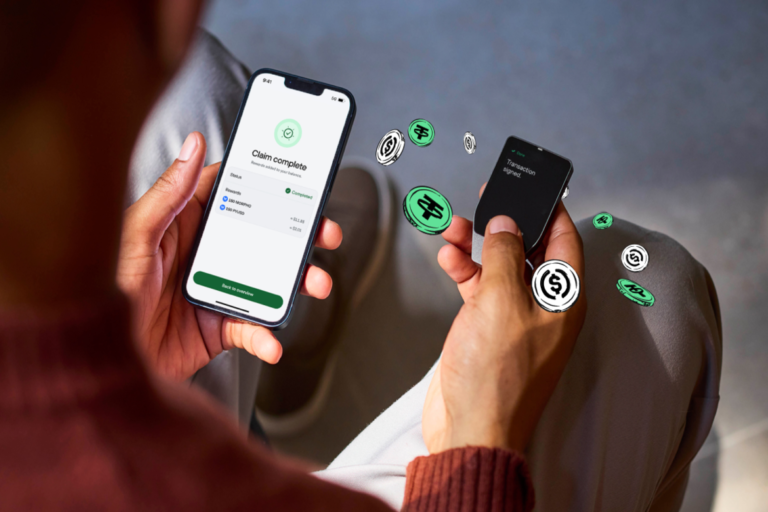
Trezor users can now earn yield on Ethereum-based USDC and USDT directly inside their hardware wallet interface, bypassing external dApps through a seamless integration with Morpho.