James Wynn’s Bitcoin Short Shows $25 Profit on a $500 Account
Arkham reported about $500 in James Wynn’s trading account and $25 profit on a Bitcoin short, far below the scale of his earlier leveraged bets.

Hyperliquid Labs is associated with Core development group behind Hyperliquid.
Hyperliquid Labs provides Core development group behind Hyperliquid through its work as a crypto exchange. Its recorded corporate or operating identity is Hyperliquid Labs, and its geographic classification or stated base is Asia. The company is classified across Crypto Exchanges, Decentralized Exchanges, Development Labs. Its activities may serve consumers, businesses, developers, investors, institutions, network participants, or professional counterparties depending on the product and jurisdiction. The scope available to a particular customer can differ because digital-asset services often operate through multiple legal entities, partners, interfaces, or regional restrictions.
The organization dates its launch or founding to 2023. The organization subsequently developed its current market position. Its documented activities include Crypto Exchanges, Decentralized Exchanges, Development Labs. That operating history sits within a market that has passed through repeated technology, funding, liquidity, and regulatory cycles. Companies in this sector frequently have to adapt products for new assets, networks, customer groups, security expectations, and legal frameworks. The present business should therefore be understood as the result of both its initial proposition and the changes required to keep operating in a fast-moving field.
Leadership disclosures identify Executive leadership is not consistently disclosed in public company materials. Founder information is Jeff Yan, iliensinc. Ownership details are not consistently disclosed in public company materials. Its financing position is described conservatively because funding details are not consistently disclosed in public company materials. A current standalone valuation is not consistently disclosed. The stock or listing position is not consistently disclosed or not publicly listed. These distinctions matter because tokens, customer balances, protocol assets, or branded digital products are not necessarily shares in the operating company and generally do not provide corporate ownership rights.
The organization reaches its market through products and services associated with Core development group behind Hyperliquid. The primary recorded brand is Hyperliquid Labs. Customers may encounter different pricing, availability, legal terms, custody arrangements, and support channels across regions. In regulated products, the entity named in a customer agreement can be as important as the brand displayed in an application. Services that connect with public blockchain networks may also depend on validators, miners, developers, liquidity providers, token holders, or governance participants that the company does not directly control.
The platform is built around cryptocurrency exchange services supported by the technology, operational processes, and partner infrastructure required for its market. Reliability, access control, monitoring, transaction integrity, data quality, and recovery processes are important operating requirements. When public blockchains are involved, confirmations, smart-contract behavior, network fees, congestion, forks, and protocol changes can influence service quality. When banking, payment, or capital-market infrastructure is involved, settlement timing, fraud controls, liquidity, chargebacks, and the availability of partners introduce additional constraints.
Income in this operating model can come from trading fees, spreads, listing services, and institutional account services. The relative contribution of each stream can change with transaction activity, customer numbers, digital-asset prices, interest rates, enterprise contract timing, advertising conditions, or the mix of products used. Reported employee information is not consistently disclosed in public company materials. Private organizations often disclose less operational and financial detail than listed companies, while public-company results can still vary sharply between reporting periods.
Hyperliquid Labs competes with other centralized and decentralized trading venues. Competitive position depends on price, product range, security, regulatory standing, distribution, brand recognition, customer support, geographic reach, technical reliability, and ease of integration. Scale can provide liquidity, data, infrastructure, and marketing advantages, while specialist competitors may attract users through a narrower focus, open-source development, lower costs, or faster adoption of new technical approaches. Switching costs differ by product: enterprise systems may be difficult to replace, while consumers can often use several exchanges, wallets, applications, publications, or service providers simultaneously.
Important business risks include custody exposure, market volatility, liquidity shifts, cybersecurity incidents, and changing licensing obligations. Digital markets can transmit operational and financial problems quickly because prices, collateral values, liquidity, customer behavior, and network conditions change continuously. A technical failure, weak control, or inaccurate disclosure may create direct losses as well as remediation costs, enforcement exposure, litigation, and reputational harm. The significance of each risk depends on the exact service and jurisdiction, so current terms and official notices require separate review.
Regulation can affect Hyperliquid Labs through licensing, consumer protection, payments, banking, securities, commodities, gambling, lending, privacy, sanctions, anti-money-laundering controls, custody, taxation, advertising, and market-conduct rules. The relevant combination depends on the products offered and the countries in which they are available. Software or infrastructure companies that do not hold customer assets may face a different framework from exchanges, brokers, banks, casinos, custodians, lenders, or asset managers, but they can still depend on regulated customers and partners. Legislative or enforcement changes may therefore alter demand, cost, or availability even when they do not apply directly to every part of the company.
The next stage of the organization is connected with plans to expand market access while improving execution, compliance, and asset security. Outcomes will also depend on disciplined use of capital, reliable technology, effective governance, and the ability to retain customers, employees, suppliers, and partners. Broader adoption in the relevant financial, media, gaming, software, or blockchain markets remains another variable. Products, ownership, leadership, operating status, and regulatory permissions can change, making the company’s official website and dated legal disclosures the appropriate sources for future updates.
cryptocurrency exchange services supported by the technology, operational processes, and partner infrastructure required for its market
trading fees, spreads, listing services, and institutional account services
Arkham reported about $500 in James Wynn’s trading account and $25 profit on a Bitcoin short, far below the scale of his earlier leveraged bets.
Hyperliquid recorded $713 million in 12-month revenue, Bloomberg reports, as Jeff Yan explores tokenized assets and a regulated route into the US.

Trade.xyz restored its GitBook documentation after unauthorized activity but warned users to avoid links while it investigates. Its notice disclosed no fund theft.

HYPE trades near $91 as NYSE owner ICE backs Trade[XYZ]’s plan for U.S. perpetual markets on Hyperliquid. Approvals remain pending, with no launch date.

Solidus Labs flagged $170 million in unusual oil-linked orders on Hyperliquid. The reported pattern raised spoofing concerns, with intent unconfirmed.

Pump.fun adds 300-plus Hyperliquid perps markets across crypto, stocks and commodities, with leverage up to 50x and a separate trading fee.
Kraken parent Payward plans regulated US perpetual futures through Bitnomial on Hyperliquid, pending approval as HIP-3* enters testnet.
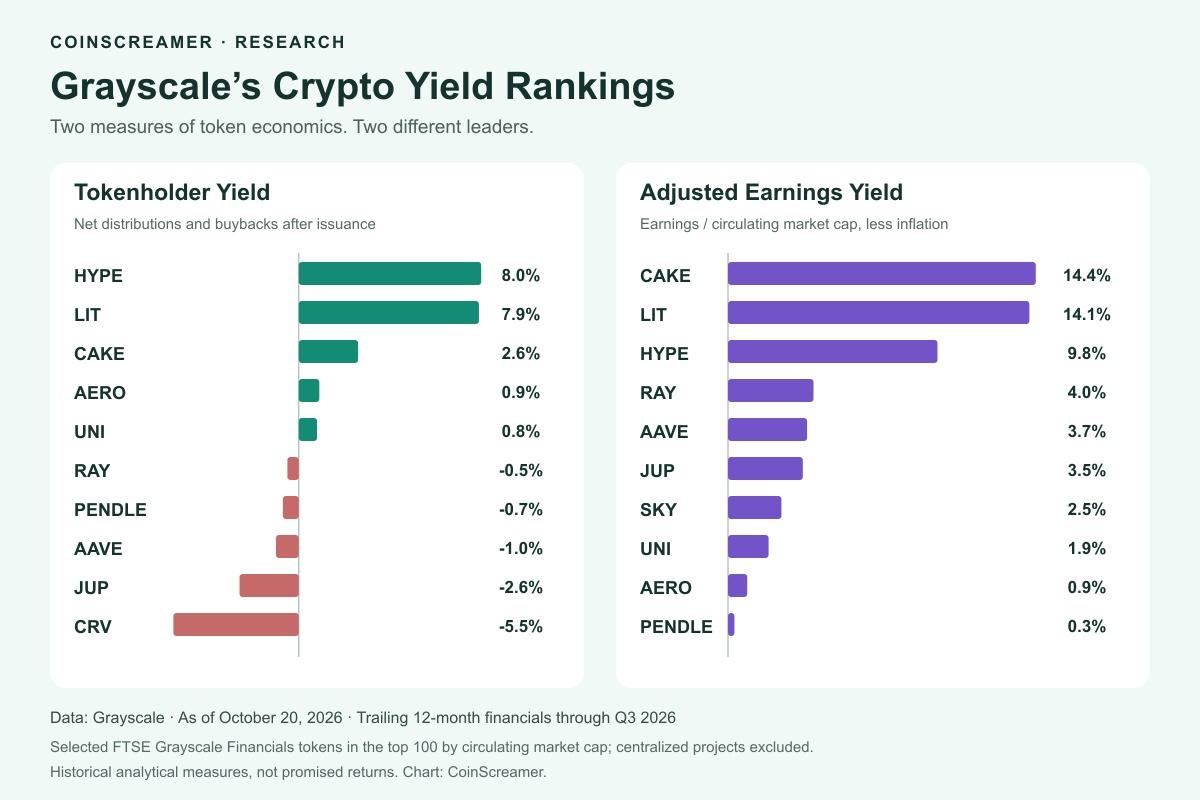
HYPE leads Grayscale’s Tokenholder Yield ranking at 8.0%, while CAKE tops Adjusted Earnings Yield at 14.4%. The two metrics measure different token economics.

Justin Sun says he cut most of his ETH trading position, retained core Bitcoin holdings and sees AI and quantum computing as risks markets may underestimate.

Ripple Prime brings institutions 24/7 swaps linked to stocks, commodities and currencies through Trade.xyz on Hyperliquid, with RLUSD collateral support.