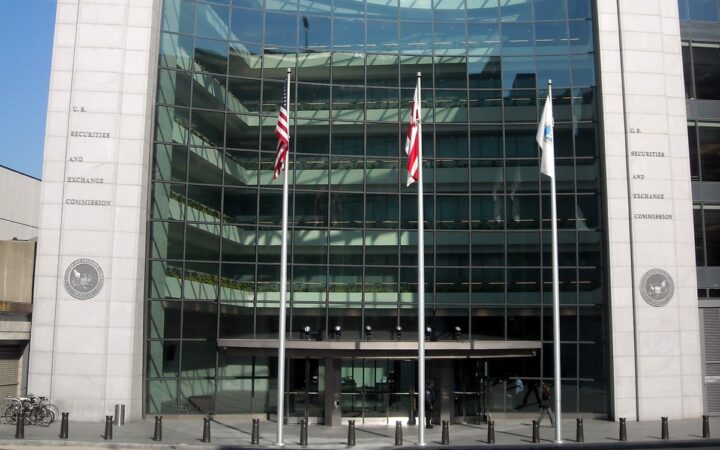
A recent S-1 registration statement amendment filed by asset manager Cryptex Finance has ignited intense debate within the digital asset community regarding the mechanics of Ripple’s XRP escrow framework. The filing, submitted to the US Securities and Exchange Commission (SEC) on August 24, 2026, details the structure for a proposed index-based product, the Digital Market Cap ETF, which assigns XRP a 4.88% weighting within the fund portfolio.
Beyond detailing index mechanics and eligibility screenings, the document includes controversial assertions regarding Ripple’s future token distribution strategy. Specifically, Cryptex claims that Ripple could release additional XRP from its escrow reserve should federal lawmakers pass the Digital Asset Market CLARITY Act. Because Ripple has made no public announcement verifying such a strategy, the statement has drawn close scrutiny from legal experts, market analysts, and cryptographers who point out that the claim originates from the fund issuer rather than an official SEC finding or a confirmed corporate disclosure from Ripple itself.
S-1 Language and the Source of the Escrow Claim
The amended registration statement outlines the fund’s proposed operational model, designed to trade under the ticker symbol BAGZ. As of August 17, 2026, XRP comprised 4.36% of the fund’s underlying digital asset index, expanding to a 4.88% effective weighting inside the ETF wrapper following the application of liquidity and market-cap filters.
The controversy centers on a specific narrative section of the disclosure. Cryptex notes that Ripple historically returns between 60% and 80% of its unlocked monthly XRP allocations back into new long-term escrow contracts. The filing then introduces an unverified forward-looking assertion, stating that Ripple has indicated a potential shift in strategy if regulatory clarity is achieved in the United States, suggesting the company may release additional XRP from escrow to support on-ledger liquidity for stablecoins and foreign exchange pairs.
Digital asset attorney Bill Morgan and other industry observers quickly questioned the validity and origin of the claim, noting an absence of supporting links, public executive statements, or formal documentation from Ripple. Without explicit corporate confirmation, the language appears to represent an unverified assumption by the issuer rather than an established strategic shift by Ripple.
Technical Realities of the XRP Ledger Escrow System
The assertion that Ripple could release additional XRP from escrow ahead of schedule faces severe technical constraints rooted in the fundamental architecture of the XRP Ledger (XRPL). The phrase “release additional XRP from escrow” implies that tokens can be unlocked on demand, an interpretation that runs directly counter to how the XRPL handles programmatically time-locked assets.
The technical architecture of the XRP Ledger enforces strict, immutable parameters.
XRP held in escrow is governed by smart-contract-like primitives directly on the XRPL. An EscrowFinish transaction automatically fails if the programmed time parameter (FinishAfter) has not elapsed. Neither Ripple executives nor external developers possess the administrative authority or cryptographic override to alter these expiration timestamps.
In 2017, Ripple placed 55 billion XRP into 55 separate escrow contracts of 1 billion XRP each, designed to unlock sequentially on the first day of every month over a multi-year horizon.
Upon the monthly release of 1 billion XRP, Ripple utilizes a portion for operational expenses, institutional sales, and ecosystem grants, returning the unused balance into newly created, multi-year escrow contracts.
Given these cryptographic constraints, analysts suggest that Cryptex’s statement likely mischaracterizes standard monthly re-escrow operations. Rather than breaking existing time locks early, Ripple could theoretically elect to retain a higher percentage of the 1 billion XRP that unlocks automatically each month instead of placing 60% to 80% back into long-term escrow. However, whether Ripple intends to adopt such a distribution policy remains unconfirmed.
Legislative Context: The CLARITY Act and SEC Review
Cryptex explicitly ties its escrow narrative to the potential enactment of the Digital Asset Market CLARITY Act, a legislative initiative designed to establish a comprehensive market-structure framework dividing digital asset oversight between the SEC and the Commodity Futures Trading Commission (CFTC).
While the bill has advanced through key legislative hurdles, including a 15-9 approval vote by the Senate Banking Committee in May 2026, its ultimate path to passage remains complex.
Senate Majority Leader John Thune filed cloture on the motion to proceed with the CLARITY Act, setting a procedural vote for September 15, 2026.
A successful cloture vote merely limits debate and advances the bill toward full Senate consideration. The legislation would still require a final Senate vote, reconciliation with House lawmakers, and executive signature before becoming law.
While statutory clarity could resolve long-standing regulatory ambiguities surrounding token classification, it does not alter the underlying cryptographic rules governing ledger-level smart contracts or token release schedules.
Market Implications and Verification Standards
For investors evaluating the proposed Cryptex Digital Market Cap ETF, the amended S-1 represents a pre-effective filing subject to ongoing regulatory review and potential revision by the SEC. Filing an S-1 does not imply SEC endorsement of the claims contained within the document, nor does it guarantee that the fund will receive regulatory approval to trade.
Until Ripple issues a formal corporate statement or onchain transaction data demonstrates a sustained drop in monthly re-escrow volumes, market participants should view claims regarding expanded XRP supply distributions as speculative issuer commentary rather than verified operational changes. Future S-1 amendments and onchain ledger metrics will provide the definitive signal as to whether Ripple’s distribution strategy evolves alongside legislative developments in Washington.
Disclaimer: CoinScreamer is an independent media brand owned and operated by NuvexMedia LLC, publishing news, research, and market insights on digital assets and related technologies. NuvexMedia LLC invests in and collaborates with companies across the digital asset, blockchain, and technology sectors. These relationships do not influence CoinScreamer’s editorial coverage, and the publication maintains full editorial independence to provide accurate, timely, and objective information. © 2025 NuvexMedia LLC. All rights reserved. This content is for informational purposes only and should not be considered legal, tax, investment, financial, or other professional advice.