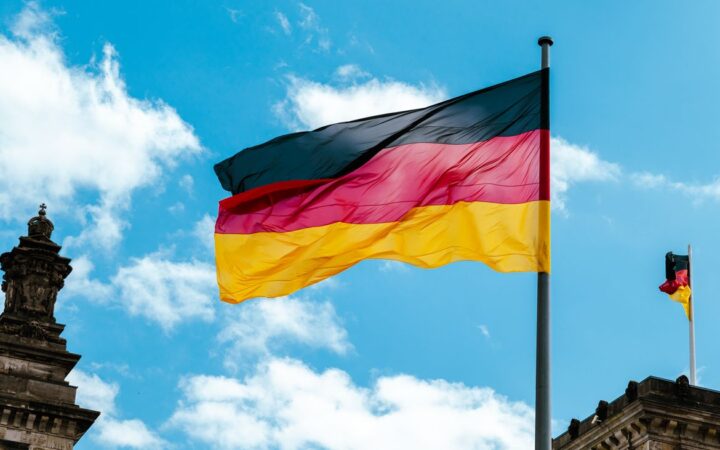
Germany has solidified its dominant position in European Union digital asset licensing under the EU’s landmark Markets in Crypto-Assets (MiCA) framework, widening its operational lead over neighboring member states. Following a routine register update published by the European Securities and Markets Authority (ESMA), Germany’s roster of approved entities expanded significantly, fueled primarily by traditional regional financial institutions scaling their digital asset infrastructure.
The supervisory update from ESMA confirmed that six additional German cooperative banks have officially received authorization as crypto asset service providers (CASPs). The newly onboarded institutions, including Raiffeisenbank Aidlingen, Ihre Volksbank, VR-Bank Mittelfranken Mitte, Volksbank Euskirchen, VR Bank Ried-Überwald, and Volksbank Backnang, highlight a growing trend of conventional German banking institutions securing formal authorization to integrate crypto assets directly into retail and institutional client offerings.
Europe’s Licensing Landscape
With these latest additions, ESMA’s official registry reflects a global total of 331 authorized CASPs operating across the single market. Germany now accounts for 79 of those licenses, maintaining a commanding lead over second-ranked France, which holds 35 authorizations, and the Netherlands, which trails with 29.
Germany’s rapid licensing trajectory has accelerated substantially throughout mid-2026. The jurisdiction counted 57 licensed CASPs in late June, demonstrating a steep upward trajectory in compliance throughput. Financial market commentators and legal experts attribute Germany’s high representation to two main institutional factors: the sheer scale of its mature domestic credit sector and the proactive regulatory approach adopted by its financial supervisor, the Federal Financial Supervisory Authority (BaFin).
According to BaFin representatives, Germany’s existing national regulatory framework previously required digital asset custodians and trading intermediaries to hold dedicated domestic licenses. Because many local entities had already operated under stringently supervised standards prior to MiCA’s implementation, a substantial portion of German financial institutions qualified for streamlined authorization and transition pathways established under the grandfathering rules of the European legislation.
Stablecoins and Compliance Enforcement
While the CASP directory continues to expand steadily, other supervisory categories tracked by ESMA remain static. The asset-referenced token (ART) register contains zero entries, reflecting ongoing stringent global capital and reserve requirements for multi-asset stablecoins. Meanwhile, the electronic money token (EMT) register stands unchanged at 43 entries, representing fiat-backed stablecoin issuers that have successfully met European banking standards.
Concurrently, European regulatory bodies maintain strict oversight regarding unauthorized operators attempting to service EU clients without valid regulatory passports. ESMA’s dataset of non-compliant entities remains pegged at 167 firms, signaling active market surveillance as member states transition toward full enforcement of MiCA standards across all crypto activities.
With traditional credit unions, savings banks, and commercial lenders systematically obtaining approvals, Germany’s early regulatory clarity is effectively establishing the nation as the primary institutional gateway for regulated crypto services within the European Union.
Disclaimer: CoinScreamer is an independent media brand owned and operated by NuvexMedia LLC, publishing news, research, and market insights on digital assets and related technologies. NuvexMedia LLC invests in and collaborates with companies across the digital asset, blockchain, and technology sectors. These relationships do not influence CoinScreamer’s editorial coverage, and the publication maintains full editorial independence to provide accurate, timely, and objective information. © 2025 NuvexMedia LLC. All rights reserved. This content is for informational purposes only and should not be considered legal, tax, investment, financial, or other professional advice.