Key Notes
- Buterin argues that protecting cryptographic keys requires independently inspectable hardware, extending openness beyond wallet software and high-level chip code.
- Publishing physical layout files would help specialists compare manufactured chips with their intended designs, although inspection tools have important limits.
- He favors a security-focused hardware market willing to trade performance for verifiability, presenting a development goal rather than a new wallet product or confirmed chip-level attack.
Vitalik Buterin is calling for computer chips whose physical construction can be independently checked, arguing that control of cryptographic keys ultimately depends on the hardware handling them. His shorthand is “not your silicon, not your keys.”
In a November 26 technical essay, the Ethereum co-founder explains why trustworthy wallet software is only one part of the security chain. A device can run the intended code while additional or altered hardware exposes information.
Open Design Code Does Not Verify the Finished Chip
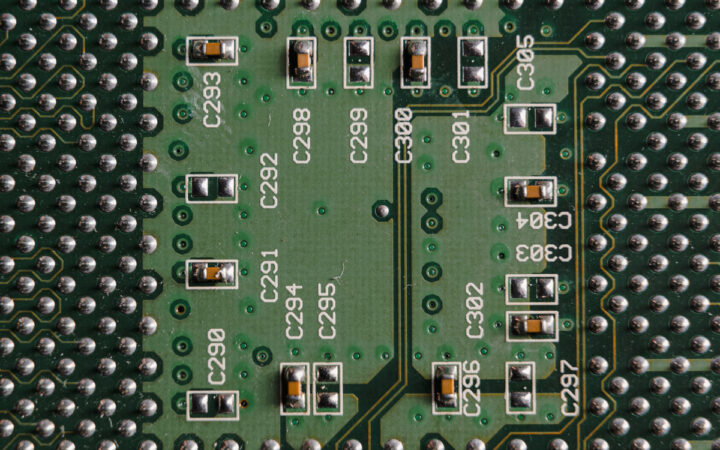
Buterin distinguishes publishing a chip’s logic from publishing its physical layout. Hardware languages such as Verilog describe behavior and connections, while GDS layout files specify the geometry of components and wiring across the chip’s layers.
That physical blueprint gives inspectors something to compare with manufactured silicon. Verilog alone may let another manufacturer produce a functionally equivalent chip, but does not provide a straightforward reference for checking the geometry of an existing one.
He argues that openness must extend further down the manufacturing stack, including information from foundries. The aim is to examine both whether a design is secure and whether the delivered hardware matches it.
Wallet Implants Illustrate a Different Hardware Attack
The essay points to reported implants with eSIM connectivity inserted into hardware wallets before sale, enabling recovery phrases to be transmitted to attackers. CoinScreamer’s implant research coverage described added electronics that intercepted display information while the original security chip remained present.
Buterin then describes a possible next step: replacing a chip with a visually similar component that performs extra malicious functions. That is a future threat scenario, rather than his announcement of a newly discovered chip-level compromise.
The broader argument builds on his earlier hardware-verification call. Authenticating one component and establishing the integrity of an entire device are different checks.
Inspection Requires Tools and Practical Limits
Buterin highlights Andrew “bunnie” Huang’s IRIS research, which uses infrared light to examine structures inside certain chip packages without removing them from a finished product. Huang’s original description identifies limits in packaging compatibility and imaging resolution.
Subtler changes can require more advanced, sometimes destructive examination. Buterin therefore expects specialist auditors, journalists and civil-society groups to perform meaningful inspections, rather than every consumer carrying a universal chip scanner.
He also favors designing chips to make inspection easier, including independently testable sections and layouts suited to imaging. Publishing files and improving the ability to inspect physical samples are complementary tasks.
A Security-Focused Market Could Accept Lower Performance
Buterin does not expect the entire semiconductor industry to become open source. He envisages a separate security-focused segment alongside the performance-driven market, particularly the commercially competitive AI sector.
Competition in AI accelerators emphasizes speed, memory and operating costs. His proposed priority is inspectability, even if the resulting hardware is less efficient. He suggests secure designs could be ten times less efficient or more while remaining useful for many tasks.
That is an argument for a development direction, not a performance benchmark or a guarantee of safety. His priorities include better open design tools, more accessible manufacturing information, improved inspection and verification extending through the hardware layer.
Disclaimer: CoinScreamer is an independent media brand owned and operated by NuvexMedia LLC, publishing news, research, and market insights on digital assets and related technologies. NuvexMedia LLC invests in and collaborates with companies across the digital asset, blockchain, and technology sectors. These relationships do not influence CoinScreamer’s editorial coverage, and the publication maintains full editorial independence to provide accurate, timely, and objective information. © 2025 NuvexMedia LLC. All rights reserved. This content is for informational purposes only and should not be considered legal, tax, investment, financial, or other professional advice.