Key Notes
- Justin Sun expects younger generations to rely less on traditional banks as blockchain-based financial services become more familiar.
- He sees AI agents as a major crypto use case over the next five years, while acknowledging that current systems still need human guidance.
- TRON is pursuing tokenized stocks, but its supplied conference account does not confirm a fourth-quarter launch date or disclose product terms.
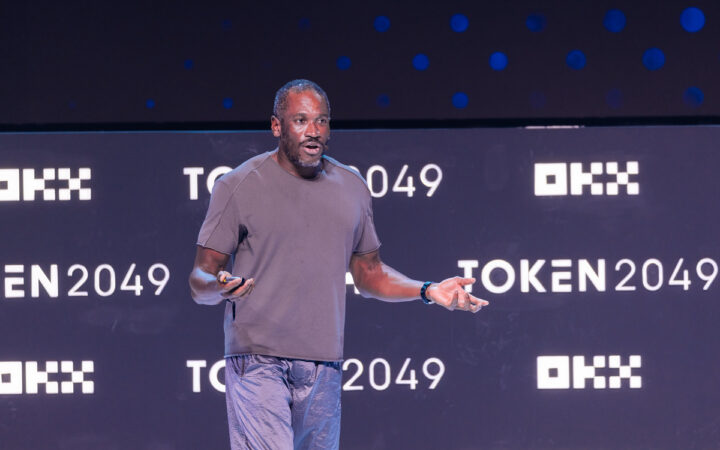
TRON founder Justin Sun expects younger generations to become less dependent on traditional banks as more financial activity moves onto blockchains. Speaking at TOKEN2049 Singapore on October 8, he identified AI agents as one of cryptocurrency’s most important potential applications over the next five years.
His outlook combines two ambitions: payment infrastructure that software can use around the clock, and wider access to US assets through tokenized stocks. The remarks describe a direction for TRON’s development rather than a completed rollout of those products.
A TRON-written conference account, published as sponsored content by BlockTempo, records Sun’s conversation with Kevin Follonier of the When Shift Happens podcast. A separate DAS Asia interview, released on Sun’s official YouTube channel, provides further detail on his payments and tokenization strategy. The video accompanying this article is that DAS discussion, rather than the TOKEN2049 main-stage session.
Younger Users Could Reduce Their Reliance on Banks
Sun contrasted software that can be upgraded continually with banking infrastructure he considers slow to change. He argued that people born after 2000 are more familiar with crypto applications and may increasingly choose them for financial services.
That is a forecast about changing preferences. It does not establish when banks would lose customers, how far that shift would extend or whether blockchain services would replace banking functions beyond transfers.
AI Agents Are the Next Payments Opportunity
Sun’s argument is that financial infrastructure designed for programmable software can serve AI agents more naturally than services built around human account holders. An agent carrying out a task may need to receive money, buy a service and pay another provider without waiting for its owner to complete each step.
In the separate DAS interview with Blockworks co-founder Michael Ippolito, Sun said the limited activity visible today partly reflects the capabilities of the agents themselves. They still need substantial human guidance to complete tasks reliably, he said.
Asked what the market might look like in five years, he envisaged AI handling much of the decision-making and wallet interaction, with people retaining an approval role. That qualification matters: his scenario involves automated execution with human authorization, rather than an immediate handover of unrestricted control.
Sun also suggested that control over an agent’s wallet could help shape its behavior. His reasoning links payment permissions and economic incentives to the tasks software is allowed to perform. The interview did not establish that wallet controls alone would solve the broader problem of AI safety.
The distinction between infrastructure and adoption is central to the discussion. A network capable of accepting automated transfers does not, by itself, demonstrate that agents are already responsible for substantial commercial demand.
TRON’s Existing Scale Provides the Starting Point
Sun cited more than 400 million TRON accounts and daily transaction value of approximately $20 billion to $30 billion. CoinNess also reported his estimate of roughly $100 billion in assets within the protocol.
Those figures describe different measures. An account count is not a count of unique people, and dollar-denominated transaction value is not a transaction count. They also do not identify how much activity comes from AI agents.
In the DAS recording, Sun traced TRON’s stablecoin growth to demand for dollar access and transfers, particularly in markets where users face unreliable local currencies or financial infrastructure. He presented tokenized investments as a potential extension of that existing demand.
Tokenized Stocks Extend the Dollar-Access Strategy
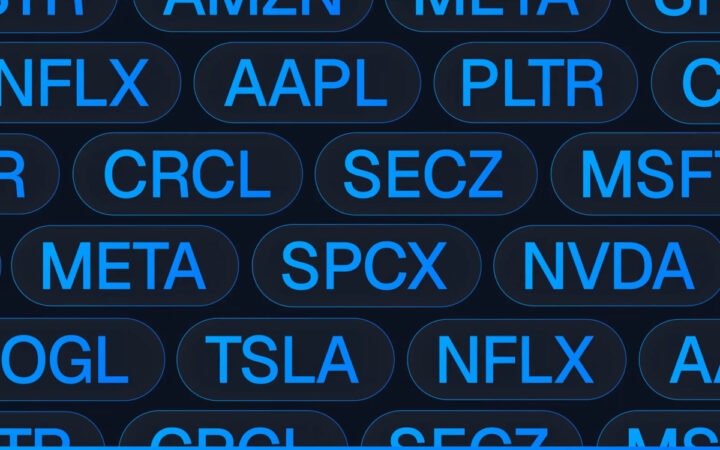
Sun’s tokenization remarks at DAS focused on giving investors outside the United States exposure to US assets. He said TRON was open to working with issuers, regulators and financial institutions to bring more products onto the network.
He described tokenized stocks as a development priority for the following year and suggested that the sector could grow substantially over five years. These were his expectations, rather than commitments from named issuers or evidence of live trading.
The available TRON-supplied TOKEN2049 account confirms plans for stock tokenization but does not specify an exact launch date, initial securities or eligible markets. A fourth-quarter 2026 launch therefore remains unconfirmed in that account. Investors would also need product documentation to establish ownership rights, redemption terms and transfer restrictions.
The strategy overlaps with Robinhood’s expansion into a wider range of stock tokens. The comparison concerns access to financial assets; it does not mean different issuers’ tokens carry identical rights or availability.
A Broader Push Toward Automated Finance
Sun’s outlook joins a wider debate over stablecoins as working capital for software. BlackRock’s research has explored their use for buying data, computing power and other services, while distinguishing that thesis from established large-scale adoption.
Some infrastructure is already being tested. The Ethereum Foundation and Open Anonymity Project’s zkAPI system separates prepaid API access from the wallet that funded it. Its privacy design addresses a different problem from Sun’s adoption forecast: how to pay for services without attaching the same billing identity to every request.
For TRON, the next evidence will be concrete products and sustained usage. Tokenized-stock terms, agent spending controls and identifiable commercial activity would show how far the strategy has progressed beyond conference predictions.
Disclaimer: CoinScreamer is an independent media brand owned and operated by NuvexMedia LLC, publishing news, research, and market insights on digital assets and related technologies. NuvexMedia LLC invests in and collaborates with companies across the digital asset, blockchain, and technology sectors. These relationships do not influence CoinScreamer’s editorial coverage, and the publication maintains full editorial independence to provide accurate, timely, and objective information. © 2025 NuvexMedia LLC. All rights reserved. This content is for informational purposes only and should not be considered legal, tax, investment, financial, or other professional advice.