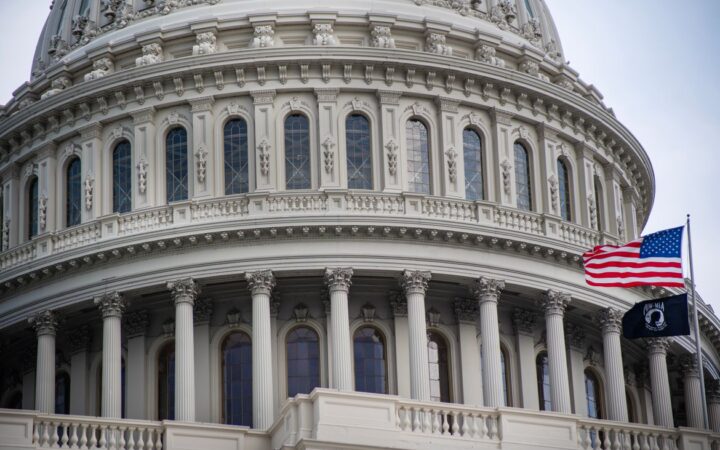
The United States Senate has overwhelmingly approved a sweeping housing affordability package that contains a significant regulatory block on the nation’s digital currency trajectory. In a decisive 85-5 vote on June 22, 2026, lawmakers passed the 21st Century ROAD to Housing Act. While the core framework of the bipartisan legislation aims to expand domestic housing supply and cut local construction red tape, the finalized text carries a critical provision: a strict prohibition preventing the Federal Reserve from issuing or creating a central bank digital currency (CBDC) through December 31, 2030.
The legislation represents the culmination of intense negotiations between Senate Banking Committee Chairman Tim Scott and progressive Democrats, operating alongside House leadership and the executive branch. By packaging the digital asset restrictions directly into an essential housing relief bill, legislative architects established a strategic compromise to secure rapid, cross-aisle support. The bill now heads to the House of Representatives, where it is expected to achieve swift passage before being sent to the president’s desk to be signed into law.
Technical Parameters and the Private Stablecoin Carve-Out
The specific legislative language targets both direct and indirect development pipelines. Under the statutory terms, the Board of Governors of the Federal Reserve System and any regional Federal Reserve Bank are legally barred from creating, issuing, or facilitating a CBDC. This explicit restriction covers any digital asset engineered to be substantially similar in design or utility, including infrastructure built through commercial financial intermediaries. Crucially, the legislation mandates that even after the moratorium expires at the tail end of 2030, the Federal Reserve cannot independently deploy a retail digital currency without explicit, formal authorization from Congress.
However, the statutory text carves out a clear exemption for private-sector innovations. The ban purposefully excludes any dollar-denominated digital asset constructed on an open, permissionless, and private protocol. This targeted exemption shields dollar-pegged stablecoins from federal interference, aligning with broader policy strategies to expand the global hegemony of the US dollar through private liquidity tools rather than a centralized, state-controlled digital ledger.
Divergent Global Approaches to Sovereign Digital Assets
While US lawmakers place a legal freeze on a sovereign digital dollar over persistent financial surveillance and civil privacy concerns, international competitors are rapidly advancing their respective architectures.
According to tracking metrics compiled by the Atlantic Council, global central banks are pushing aggressively into decentralized settlement infrastructure:
The starkest contrast is unfolding in China, which recently onboarded 26 major financial institutions to its cross-border digital yuan (e-CNY) payment infrastructure. By sidelining a centralized government token until 2030, the United States is intentionally diverting its digital finance strategy away from direct state control, clearing a multi-year path for regulated, private stablecoin networks to lead domestic on-chain finance.
Disclaimer: CoinScreamer is an independent media brand owned and operated by NuvexMedia LLC, publishing news, research, and market insights on digital assets and related technologies. NuvexMedia LLC invests in and collaborates with companies across the digital asset, blockchain, and technology sectors. These relationships do not influence CoinScreamer’s editorial coverage, and the publication maintains full editorial independence to provide accurate, timely, and objective information. © 2025 NuvexMedia LLC. All rights reserved. This content is for informational purposes only and should not be considered legal, tax, investment, financial, or other professional advice.