Key Notes
- Jensen Huang has resigned as Nvidia’s president, CEO and a director, with Colette Kress appointed interim CEO.
- Shares opened roughly 13% lower before recovering part of the decline, while the board’s independent investigation continues.
- Nvidia keeps its November 17 earnings date and expects customer commitments and its product roadmap to continue without interruption.
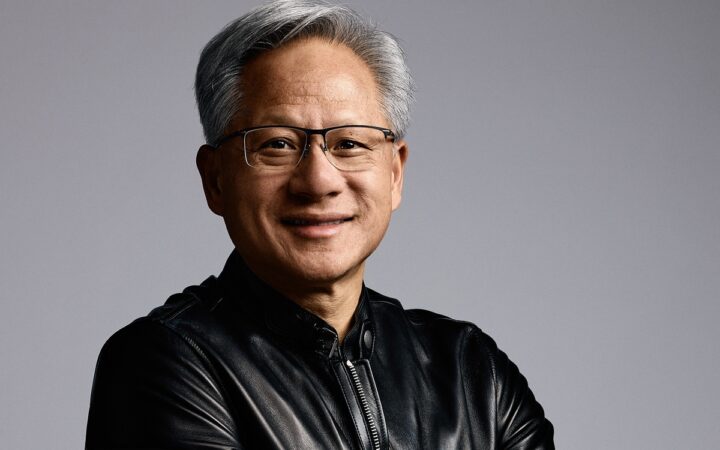
Jensen Huang has resigned as Nvidia’s president, chief executive and a director, ending his 33-year leadership of the company he co-founded. The AI chipmaker announced the departure on November 12 and appointed finance chief Colette Kress interim CEO, putting a longtime executive in charge five days before its next earnings report.
The change follows Huang’s admission of infidelity, reports of a second relationship involving a Nvidia executive, and an independent investigation into allegations that he was targeted by a foreign intelligence operation. Nvidia’s announcement confirms the leadership transition without giving a reason for his resignation or publishing the investigation’s findings.
Shares opened roughly 13% lower before recovering part of the decline. The immediate challenge extends beyond choosing a successor: Nvidia must maintain customer confidence while its board addresses questions about executive conduct, security and oversight.
What Nvidia Has Confirmed
Nvidia’s SEC filing dates the board’s acceptance of Huang’s resignation to November 11, effective immediately. The public announcement followed on November 12. He left the presidency, CEO role and board seat together.
Kress, 59, remains executive vice president and CFO while serving as interim chief executive. The board will consider internal and external candidates for the permanent position. Harvey C. Jones, a director since 1993 and former Synopsys chief executive, becomes Nvidia’s first board chair.
The appointments separate immediate operating responsibility from the permanent succession decision. Kress has run Nvidia’s finances since 2013 and enters the role with direct knowledge of its financial commitments. As AIstify’s coverage explains, her earlier career included senior finance positions at Cisco and Microsoft.
The Investigation and the Reported Relationships
On November 8, Huang published an employee letter admitting that he had been unfaithful to his wife. He apologized to his family and colleagues and pledged to cooperate with the board’s investigation. The letter did not identify the other person or confirm that intelligence allegations were true.
Yahoo Finance, citing earlier reporting, described a relationship with Alice Huang, a former executive at Singapore-based Megaspeed whom US intelligence officials reportedly believed was acting for China. That assessment remains an allegation about her activities. Huang’s admission of infidelity does not establish that he knowingly dealt with a spy or disclosed protected information.
The board’s initial statement said it had no reason at that time to believe national security or Nvidia secrets had been compromised. Independent directors and outside counsel were assigned to examine the reports. As AIstify noted in its investigation coverage, that was the board’s starting position, not the result of a completed inquiry.
On November 10, independent directors named former acting US Attorney Joon H. Kim and Wachtell, Lipton, Rosen & Katz to conduct the review. A day later, The New York Times reported a separate relationship involving Kimberly Powell, Nvidia’s vice president of healthcare. MarketSpeaker’s Wednesday report traced the renewed selling after that allegation emerged.
The sequence raises questions about disclosures to directors and the handling of relationships within the company. The transition announcement does not identify a particular policy breach or say which allegation determined the board’s decision.
Shares Recover Part of the Opening Plunge
Nvidia opened Thursday at $150.99 against Wednesday’s $173.73 close, a decline of approximately 13.1%. By 10:08 a.m. Eastern, or 15:08 UTC, it traded at $160.66, down 7.52%, according to Yahoo Finance. Its displayed market capitalization was then about $3.88 trillion.
At the opening price, Nvidia stood roughly 38% below its quoted 52-week high of $243.37. The rebound narrowed that gap to about 34% by 10:08 a.m. Eastern, leaving the stock substantially below its peak despite the recovery from Thursday’s opening selloff.
The reversal also shows why an intraday recovery cannot establish that the governance crisis has passed. Investors still lack the investigation’s conclusions and a permanent leadership decision.
Why the Pressure Extends Across AI Infrastructure
Nvidia’s exposure reaches beyond selling processors. It also invests in customers and commits to buying computing capacity, tying parts of its business to the financing of the AI buildout. AIstify’s examination of AI financing describes how those arrangements can help customers build infrastructure while leaving Nvidia exposed to their performance.
CoreWeave illustrates the connection. MarketSpeaker reported its shares down nearly 15% before Thursday’s opening in its CoreWeave analysis. Nvidia is an investor, supplier and customer. A capacity agreement obliges it to buy qualifying unsold computing capacity through April 2032, subject to contractual conditions.
A management change does not itself cancel those agreements. The commercial question is whether Nvidia maintains its commitments and whether infrastructure providers can fund construction, deliver capacity and cover borrowing costs.
November 17 Becomes the Next Test
Nvidia’s transition announcement says operations, customer commitments and the product roadmap are expected to continue uninterrupted. It keeps fiscal third-quarter 2027 results scheduled for November 17, followed by an analyst call at 5 p.m. Eastern.
That event will give Kress an early opportunity to address demand, financial commitments and operating priorities. Results have not yet been released, so predictions of a record report or an inevitable share-price rebound remain forecasts.
The published corporate records also provide no evidence that the White House orchestrated Huang’s removal or assumed control of Nvidia. What is established is a board-led succession process, an unresolved investigation and a major AI supplier attempting to preserve business continuity through an abrupt leadership change.
Disclaimer: CoinScreamer is an independent media brand owned and operated by NuvexMedia LLC, publishing news, research, and market insights on digital assets and related technologies. NuvexMedia LLC invests in and collaborates with companies across the digital asset, blockchain, and technology sectors. These relationships do not influence CoinScreamer’s editorial coverage, and the publication maintains full editorial independence to provide accurate, timely, and objective information. © 2025 NuvexMedia LLC. All rights reserved. This content is for informational purposes only and should not be considered legal, tax, investment, financial, or other professional advice.