Key Notes
- The CFTC has opened an early consultation on CTX and CAM to develop crypto-specific transaction rules and an exchange registration route under existing law.
- CAM would be a dedicated crypto asset market subcategory of designated contract market registration, built for the transactions covered by the initiative.
- The optional federal route would cover eligible retail trading with margin, leverage or financing, while broader oversight of ordinary spot venues still needs Congress.
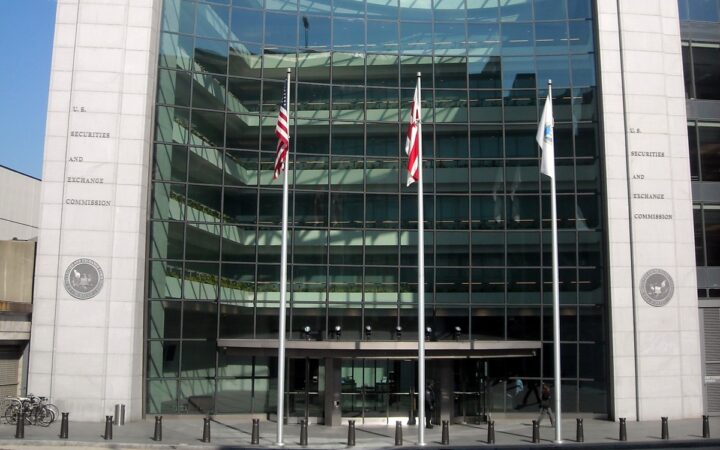
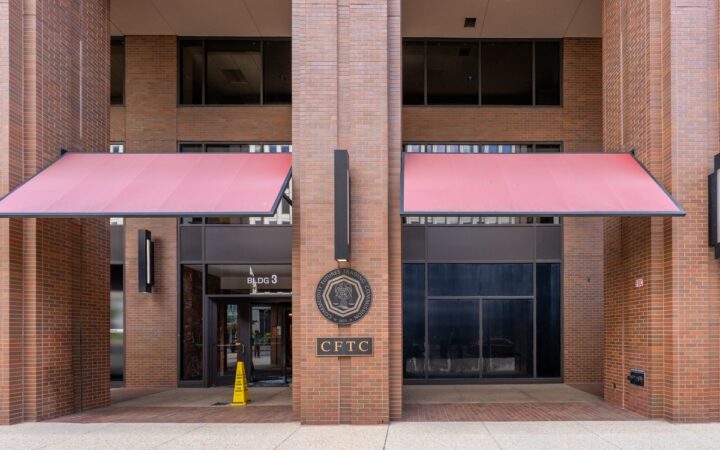
The US Commodity Futures Trading Commission has opened a public consultation on a new framework for crypto transactions and exchanges, advancing its effort to write dedicated market rules alongside the Securities and Exchange Commission.
The agency announced an advance notice of proposed rulemaking on October 5 covering Regulation Crypto Asset Transactions, or CTX, and Regulation Crypto Asset Markets, or CAM. The notice seeks input to inform future rules; it does not put a completed regulatory regime into effect.
Chairman Michael Selig outlined the plan in a Wall Street Journal op-ed republished by the CFTC. He described an optional federal route for eligible exchanges, while acknowledging that the agency cannot require all ordinary spot crypto platforms to register without congressional action.
The announcement therefore moves the rulemaking process forward without resolving the entire market-structure debate. It follows the earlier filing covered by CoinScreamer, which sent the CTX and CAM initiative to White House review.
A Federal Route for Eligible Crypto Exchanges
The consultation centers on Section 2(c)(2)(D) of the Commodity Exchange Act, which addresses certain retail commodity transactions. The CFTC is examining how to apply that framework to crypto assets through requirements designed for their trading and infrastructure.
The agency is asking how a national regime could prevent abusive practices and how crypto-specific guidance could explain requirements and practices relevant to compliance. It also wants feedback on creating a dedicated crypto asset market category within designated contract market registration.
A designated contract market is a CFTC-registered exchange category. CAM would be a proposed subcategory built specifically for the crypto transactions covered by the initiative, rather than an already available license automatically granted to any crypto business.
The CFTC’s consultation document also examines integrated business structures. It contemplates allowing a CAM to register as a futures commission merchant, a derivatives clearing organization, or both, as well as permitting affiliations between those entities. The agency is asking how associated conflicts of interest should be addressed.
Other questions concern customer-fund segregation, crypto custody, financing arrangements and the margin and liquidation practices used for leveraged positions. These are subjects for consultation and potential future requirements, rather than a final checklist that exchanges must immediately implement.
Selig said eligible platforms would be able to offer retail trading on a margined, leveraged or financed basis under a single federal market-regulatory scheme. That proposed route is narrower than compulsory federal registration for every venue where users buy and sell digital assets.
Selig argued that clearer rules could help prevent misconduct before an exchange fails. He criticized the previous administration’s reliance on enforcement and said the new approach would combine room for innovation with protections against fraudulent and abusive practices.
The Spot-Market Gap Still Requires Congress
The legal distinction turns partly on how a transaction is structured. A straightforward, fully funded purchase on an ordinary spot venue differs from a retail commodity transaction offered with leverage, margin or financing.
That boundary predates today’s announcement. In a September 2025 joint statement, SEC and CFTC staff explained that certain leveraged retail commodity transactions generally must take place on a CFTC-registered designated contract market or foreign board of trade unless an exception or appropriate relief applies.
The staff also identified an exception for transactions listed on an SEC-registered national securities exchange. Their statement discussed clearing, settlement, market surveillance and publication of trade data, while explicitly noting that the staff’s views did not themselves change the law.
Today’s initiative seeks to develop rules within that existing authority. It would not give the CFTC a new statutory power to impose a comprehensive registration system on ordinary spot exchanges merely because their assets are digital.
That leaves a continuing role for the stalled CLARITY Act or other market-structure legislation. Selig said agency action cannot indefinitely substitute for a framework passed by Congress. CTX and CAM should therefore be understood as a regulatory route available under current law, rather than legislation’s complete replacement.
The SEC Is Building Other Parts of the Framework
The agencies have already coordinated on asset classification. Their March 17 interpretation set out categories for digital commodities, collectibles, tools, stablecoins and digital securities, with the CFTC joining to explain how it would administer the Commodity Exchange Act consistently.
The interpretation also distinguishes a token from the investment contract through which it may be offered. A crypto asset that is not itself a security can still be involved in an investment contract, and that relationship can subsequently end. The classification framework is consequently more specific than a blanket exemption for every token-related transaction.
The SEC’s separate Regulation Crypto Assets proposal, issued in August, addresses fundraising involving certain investment contracts. It would provide an exemption for offerings up to $5 million over four years and another for offerings up to $75 million during each 12-month period.
Both routes would require narrative disclosures. The larger exemption would also require financial statements and ongoing reporting, while antifraud and antimanipulation provisions would continue to apply. The proposal includes a conditional safe harbor concerning when a crypto asset is no longer subject to an investment contract, with comments due October 20.
On October 1, the SEC also proposed conditional custody options for investment advisers and regulated funds. CoinScreamer’s custody coverage explains the proposed use of adviser self-custody and state trust companies, including safeguarding and oversight requirements.
Those initiatives address different activities: asset classification, capital raising, custody and exchange trading. Their coordination does not make them a single adopted rulebook or remove the separate conditions attached to each proposal.
Consultation Comes Before Binding Rules
The CFTC says written comments must arrive within 60 days of the advance notice’s publication in the Federal Register. The clock is tied to that publication, rather than automatically to the October 5 press release.
The agency intends to use the responses to inform potential future action. Its announcement does not establish a final compliance deadline or confirm which exchanges will ultimately seek registration under CAM.
For trading platforms, the next issue is how the consultation translates into registration requirements and transaction rules. For the wider market, the unresolved question remains whether Congress will supply the authority needed for comprehensive federal oversight of ordinary spot trading.
Disclaimer: CoinScreamer is an independent media brand owned and operated by NuvexMedia LLC, publishing news, research, and market insights on digital assets and related technologies. NuvexMedia LLC invests in and collaborates with companies across the digital asset, blockchain, and technology sectors. These relationships do not influence CoinScreamer’s editorial coverage, and the publication maintains full editorial independence to provide accurate, timely, and objective information. © 2025 NuvexMedia LLC. All rights reserved. This content is for informational purposes only and should not be considered legal, tax, investment, financial, or other professional advice.