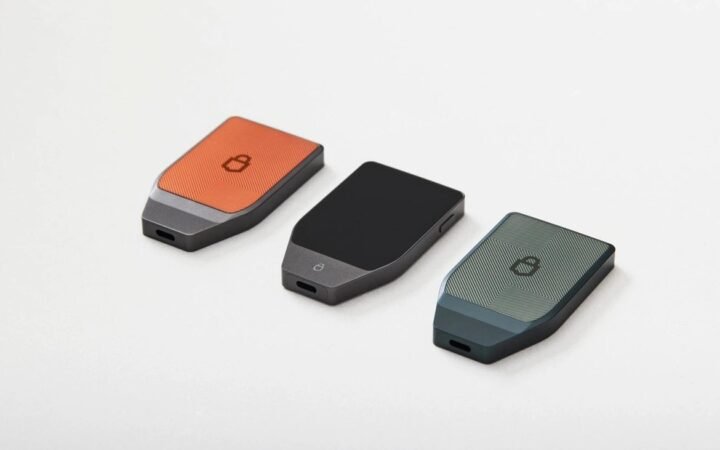
Trezor’s flagship hardware wallet, the Safe 7, has just picked up a 2026 Red Dot Award for Product Design. It’s a major win for the company, landing the device a spot alongside some of the world’s most recognizable names in consumer electronics and automotive design.
The Red Dot is one of the toughest design competitions to crack. To win, a product has to impress a jury of experts across a range of criteria, including how innovative it is, how it feels in the hand (ergonomics), and how well it’s built. Trezor will officially collect the trophy at the Red Dot Gala in Essen, Germany, later this year.
Since 2014, Trezor has shipped over two million wallets, but the Safe 7 is now the most widely used device in their lineup to earn this specific distinction.
Design Approach Focused on Usability and Self-Custody
Hardware wallets have a reputation for being clunky or overly technical, but the Safe 7 takes a different path. It features a haptic touchscreen and ditches physical buttons entirely, moving closer to the user experience of a modern smartphone.
Under the hood, it’s still built for the paranoid security standards crypto users expect. It runs entirely on open-source firmware and uses the TROPIC01, a transparent secure element designed so that the public can actually audit its security architecture. The goal is simple: keep crypto offline and under the user’s direct control, so they don’t have to trust an exchange to hold their keys.
Adam Budínský, Trezor’s Head of Hardware, explained that the team wanted to bridge the gap between high security and mainstream usability. He stated:
“For some people, their first impression of a hardware wallet is that it looks like something built for engineers. That impression keeps people away before they even learn what self-custody means. The Safe 7 was designed to fix that. Winning Red Dot confirms what our users already told us, that this feels like a product that belongs next to the rest of your devices, and can be used easily.”
Self-Custody Hurdle
Despite the “not your keys, not your coins” mantra, the reality is that most crypto holders still leave their assets on exchanges. While trust in those centralized platforms has plummeted following several major collapses, hardware wallet adoption is still catching up.
Barriers like seed phrase anxiety and the technical look of traditional devices have kept many users on the sidelines. Budínský pointed out that while open-source projects are often seen as unpolished, the Safe 7 was built to prove that you can have verifiable, high-level security without sacrificing a premium look and feel.
This Red Dot win suggests the hardware wallet industry is shifting. Security is still the foundation, but if self-custody is ever going to go truly mainstream, it’s going to need the kind of design and usability that users have come to expect from their everyday tech.
Disclaimer: CoinScreamer is an independent media brand owned and operated by NuvexMedia LLC, publishing news, research, and market insights on digital assets and related technologies. NuvexMedia LLC invests in and collaborates with companies across the digital asset, blockchain, and technology sectors. These relationships do not influence CoinScreamer’s editorial coverage, and the publication maintains full editorial independence to provide accurate, timely, and objective information. © 2025 NuvexMedia LLC. All rights reserved. This content is for informational purposes only and should not be considered legal, tax, investment, financial, or other professional advice.