Key Notes
- Matt Hougan points to lower Bitcoin volatility over recent measurement windows as evidence supporting its development into a digital store of value.
- His hypothetical 1% Bitcoin allocation improved historical portfolio returns with a small increase in volatility, but future results remain uncertain.
- Fidelity and World Gold Council research highlight separate questions about measurement periods, position sizing and performance during market stress.
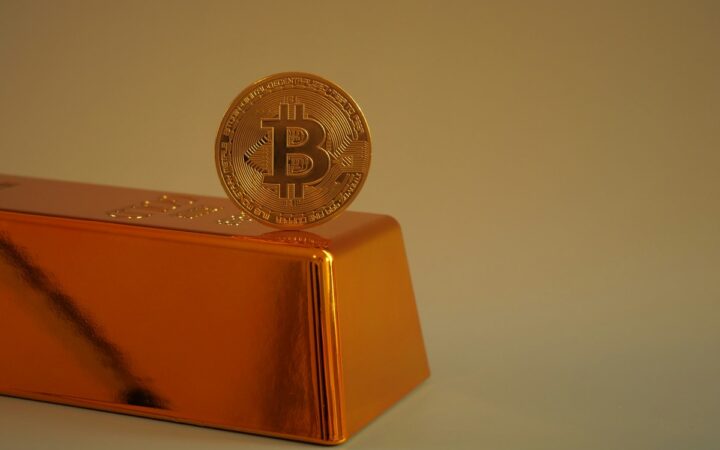
Bitcoin’s declining volatility strengthens the case that it is developing into digital gold, according to Bitwise Chief Investment Officer Matt Hougan. His argument treats the asset’s remaining price swings as part of its maturation, rather than evidence that a digital store of value cannot emerge.
Hougan sets out the thesis in a sponsored essay for The Nakamoto Project’s Bitcoin Reframed series. The page is advertiser-funded content hosted by WSJ, rather than a Wall Street Journal newsroom report.
The Volatility Figures Behind the Argument
The essay puts Bitcoin’s annualized volatility at 66% over the past decade, 52% over five years, 47% over three years and 44% over the latest year. Hougan presents that progression as evidence of a market becoming more established.
Those figures compare overlapping measurement windows. They show lower volatility in the shorter, more recent periods, but do not by themselves demonstrate a decline in every individual calendar year. They also describe historical price behavior, rather than a forecast of the next year’s trading range.
Fidelity Digital Assets’ volatility research explains why this distinction matters. Realized volatility measures the dispersion of past returns, including upward and downward moves. It is different from options-implied volatility, which reflects expectations embedded in derivatives prices.
In its May 2024 analysis, Fidelity argued that a growing capital base can reduce the impact of new money entering a market. The same inflow represents a smaller share of a larger asset. That offers an economic explanation for falling volatility as adoption broadens, without implying that abrupt repricing disappears.
Digital Gold Still Faces a Safe-Haven Test
A quieter market and a reliable hedge are different propositions. Volatility describes how widely returns fluctuate; a safe-haven claim also concerns what an asset does when other investments are falling. A lower long-term volatility figure cannot answer that second question on its own.
The World Gold Council made this distinction in an August 2024 analysis. The gold-industry organization argued that Bitcoin and bullion had different market drivers, with Bitcoin behaving more like risk assets during several periods of stress in its historical sample.
Its conclusion challenges the idea that Bitcoin can already substitute for gold in a defensive allocation. The study used data available in 2024, however, so it provides a historical counterpoint rather than a fresh measurement of October 2026 market conditions.
The gold comparison also serves different purposes across crypto research. As CoinScreamer’s VanEck coverage explains, Matthew Sigel uses gold’s monetary role as a potential valuation benchmark. Such an adoption scenario is separate from establishing that the two assets currently offer equivalent protection during a sell-off.
Hougan Favors an Allocation Investors Can Tolerate
Hougan’s recommendation is to “own an amount you can live with either way.” His essay cites a hypothetical 60/40 stock-and-bond portfolio since 2015: adding 1% Bitcoin with quarterly rebalancing lifted annualized volatility from about 9.8% to 10%, while increasing annual returns by almost one percentage point.
The example concerns a small position inside a diversified portfolio. Its results should not be confused with the volatility of Bitcoin itself, nor treated as an outcome available regardless of purchase date, portfolio composition or subsequent market performance.
Hougan explored the broader portfolio question in a separate June 2025 research memo. Using 2017–2024 data, he examined how Bitcoin exposure interacted with changes to stock, bond and Treasury-bill allocations, emphasizing the importance of the portfolio’s overall risk budget.
That memo explicitly labels its simulations as hypothetical, constructed with hindsight and excluding taxes, transaction costs and investment expenses. These qualifications matter because an attractive historical allocation result does not establish what an investor will earn after implementation costs.
The Research Window Can Change the Result
Fidelity’s March 2026 portfolio study similarly considers five-year and ten-year periods, noting that early Bitcoin gains can materially influence long-term statistics. It records periods of underperformance, including 2025, alongside the asset’s strong longer-term returns.
The report says some investors may appropriately retain no Bitcoin exposure, while arguing that institutional managers should have a well-informed rationale for their decision. Position size, in its framework, depends on specific objectives and constraints rather than a universal minimum allocation.
The digital-store-of-value thesis also appears in BlackRock’s research on automated commerce. CoinScreamer’s AI-agent coverage distinguishes its proposed uses for stablecoins as spending money and Bitcoin as a possible longer-term reserve. Those are potential future roles, rather than evidence that software agents already hold substantial Bitcoin treasuries.
Across these arguments, the unresolved question is how Bitcoin behaves as its uses and investor base develop. Historical volatility, performance during market stress and the effect of a position on a diversified portfolio each test a different part of the digital-gold thesis.
Disclaimer: CoinScreamer is an independent media brand owned and operated by NuvexMedia LLC, publishing news, research, and market insights on digital assets and related technologies. NuvexMedia LLC invests in and collaborates with companies across the digital asset, blockchain, and technology sectors. These relationships do not influence CoinScreamer’s editorial coverage, and the publication maintains full editorial independence to provide accurate, timely, and objective information. © 2025 NuvexMedia LLC. All rights reserved. This content is for informational purposes only and should not be considered legal, tax, investment, financial, or other professional advice.