Key Notes
- Democrats’ congressional victory creates new obstacles for Trump’s crypto legislative agenda.
- TD Cowen warned before the vote that a Democratic sweep could stall the CLARITY Act for two years.
- Congressional scrutiny and appointment battles can intensify while regulators continue acting under existing law.
President Donald Trump’s crypto agenda faces a harder path after Democrats won control of Congress in the US midterm elections, putting the industry’s push for comprehensive legislation at risk and opening the door to tougher investigations.
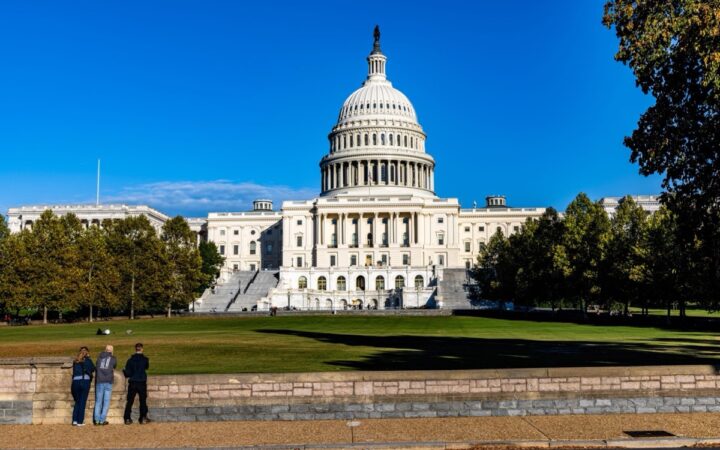
The Associated Press has called both the House and Senate for Democrats. Their new majorities will take office in January, giving the party control of congressional committees and substantial leverage over the president’s final two years.
Analysts’ warnings center on legislation, oversight and appointments. The election does not itself reverse existing crypto rules, and Trump’s administration retains room to act through regulators under current law.
The CLARITY Act Faces a Difficult Restart
TD Cowen Washington analyst Jaret Seiberg warned in an election-day note, shared with Bitcoin Magazine, that a Democratic sweep would sour the political environment for crypto. “We do not expect the Clarity Act to pass over the next two years,” he wrote.
That was a forecast issued before the results, rather than a decision announced by the incoming Congress. The market-structure bill passed the House in 2025 but failed to advance in a Senate procedural vote in September 2026. A bill left unfinished when the current Congress ends must be introduced again.
The remaining lame-duck session therefore offers a limited window before lawmakers start over. Its existence does not establish that a compromise has been reached or that a vote is scheduled.
Investigations and Appointments Become Pressure Points
Committee leadership could change the debate. CoinDesk’s election-night report said Democrats were likely to press harder on illicit finance, consumer protections and restrictions on public officials’ crypto dealings. Elizabeth Warren could lead Senate Banking, while Sherrod Brown’s return to the Senate restores another prominent industry critic.
Those chairmanships and assignments are not all settled. But control of hearings and investigative agendas matters independently of whether Democrats can pass a new law.
In an October 13 Reuters analysis, lawyers and policy specialists explained that a congressional majority brings subpoena power, investigative staff and the ability to summon agency leaders and corporate executives. Trump’s family’s crypto interests were already a potential focus.
The Senate also controls confirmations. Seiberg argued that Democrats could use that leverage over nominees to agencies including the SEC and CFTC, complicating the administration’s ability to shape their leadership.
Regulators Still Have a Separate Route
Reuters’ analysis also cautioned that Democratic congressional control would not automatically stop the administration from granting regulatory relief. New restrictions would face the usual legislative hurdles, including Trump’s veto power.
Treasury Secretary Scott Bessent has already backed working through the SEC and CFTC after the CLARITY setback, as our earlier coverage explains. Agency action can advance policy within existing authority, although it cannot substitute for every statutory change the industry seeks.
Bipartisan negotiations also remain possible. In pre-election reporting, The Block described discussions about a narrower bill and quoted the Blockchain Association as remaining committed to clear rules regardless of congressional control.
Bitcoin’s election-night rebound shows that the market response has already been more complicated than a one-way political selloff. For crypto companies, the longer-term test is whether regulatory progress can survive a more confrontational Congress.
Disclaimer: CoinScreamer is an independent media brand owned and operated by NuvexMedia LLC, publishing news, research, and market insights on digital assets and related technologies. NuvexMedia LLC invests in and collaborates with companies across the digital asset, blockchain, and technology sectors. These relationships do not influence CoinScreamer’s editorial coverage, and the publication maintains full editorial independence to provide accurate, timely, and objective information. © 2025 NuvexMedia LLC. All rights reserved. This content is for informational purposes only and should not be considered legal, tax, investment, financial, or other professional advice.