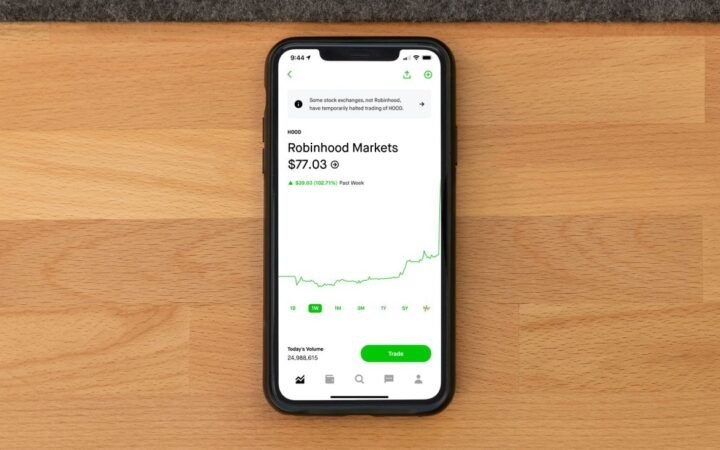
The boundary separating retail brokerage accounts from decentralized protocols is dissolving. On July 1, 2026, retail trading pioneer Robinhood announced the official mainnet launch of Robinhood Chain, a public Ethereum Layer-2 (L2) network built on Arbitrum Orbit technology. Following four months of rigorous testnet optimization, the network has been deployed as an “AI-native” environment tailored specifically for real-world assets (RWAs) and automated on-chain primitives.
The aggressive infrastructural rollout serves as a strategic counterweight to a severe cyclical squeeze on Robinhood’s balance sheet. In its recent financial disclosures, the firm revealed that its crypto transaction revenue plummeted nearly 50% year-over-year, dropping from $252 million to $134 million. To reverse this trend, Robinhood is executing a massive global expansion strategy, highlighted by the upcoming launch of retail crypto trading services specifically tailored for UK residents.
Tokenized Stocks and Global Asset Productivity
At the core of the newly launched L2 is the global rollout of Robinhood’s Stock Tokens. Available within the Robinhood Wallet app across more than 120 countries (excluding the US, UK, and select restricted jurisdictions), the framework permits 24/7 continuous trading of mega-cap equities like NVDA, AAPL, and GOOG.
Rather than operating as simple static price trackers, these tokenized debt securities are fully composable within decentralized finance. Eligible international investors can deposit their Stock Tokens directly into public lending pools or deploy them as liquid trading collateral across decentralized exchanges like Uniswap. This satisfies CEO Vlad Tenev’s long-standing vision of preventing traditional centralized settlement freezes through programmatic, always-on liquidity pools.
Capturing Market Share Amid Competitor Vulnerability
The timing of the mainnet release positions Robinhood to directly challenge existing Layer-2 dominant networks, most notably Coinbase’s incubation network, Base. While Base commands the second-largest L2 market share with roughly $11 billion in total value locked, the network suffered severe reliability issues throughout June, experiencing consecutive block-production outages triggered by a core sequencer bug. Robinhood aims to capitalize on these stability concerns by emphasizing its institutional-grade tech partners, launching with deep integrations alongside Chainlink, Alchemy, and BitGo.
Simultaneously, the brokerage launched Robinhood Earn to capture yield-seeking capital. Powered by the decentralized lending protocol Morpho, the product allows eligible self-custody wallet users to lend the dollar-backed stablecoin USDG at an estimated 7% annual percentage yield (APY). To address retail security anxieties surrounding smart-contract bugs, the yield vehicle features underlying exploit insurance backed by Lloyd’s of London and RELM. Wall Street responded favorably to the aggressive product convergence, driving Robinhood shares (NASDAQ: HOOD) up 8% following the London keynote.
Disclaimer: CoinScreamer is an independent media brand owned and operated by NuvexMedia LLC, publishing news, research, and market insights on digital assets and related technologies. NuvexMedia LLC invests in and collaborates with companies across the digital asset, blockchain, and technology sectors. These relationships do not influence CoinScreamer’s editorial coverage, and the publication maintains full editorial independence to provide accurate, timely, and objective information. © 2025 NuvexMedia LLC. All rights reserved. This content is for informational purposes only and should not be considered legal, tax, investment, financial, or other professional advice.