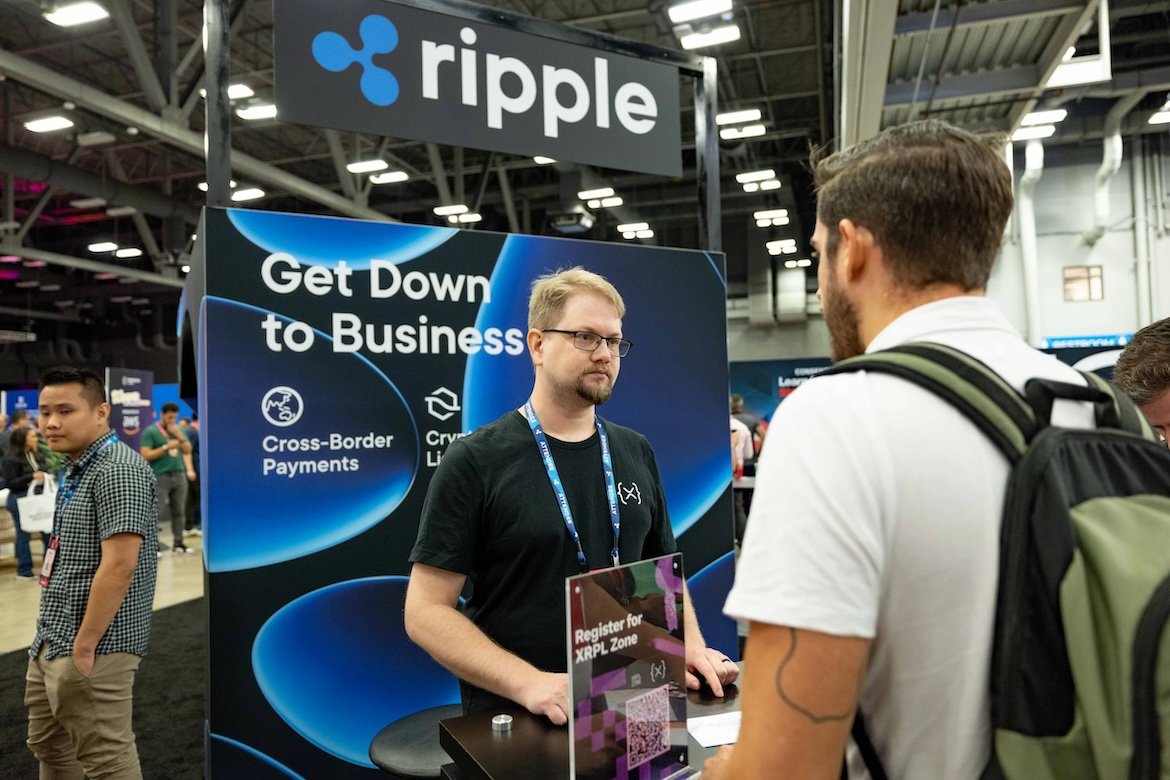

Ripple, the company behind XRP and the RLUSD stablecoin, has announced a major partnership with Mastercard, Gemini, and WebBank to integrate stablecoins into credit card payments. The collaboration represents a significant step in merging traditional finance with blockchain-based settlement systems.
Under the new arrangement, purchases made with a Gemini-branded credit card will be settled in RLUSD, Ripple’s U.S. dollar–backed stablecoin. Settlement between Mastercard and WebBank – the Utah-based issuer of the Gemini card – will occur on Ripple’s XRPL blockchain, enabling faster and more transparent transactions.
“Mastercard is integrating regulated, open-loop stablecoins into our global payments network to support consumer choice and safety,” said Sherri Haymond, Mastercard’s head of digital commercialization. “We’re enabling stablecoin settlement today while exploring how these assets can enhance future blockchain use cases.”
Stablecoins Enter the Mainstream
The partnership highlights a growing push among major financial institutions to adopt regulated stablecoins. Ripple says this is among the first cases where a U.S. bank settles credit card transactions using stablecoins on a public blockchain.
The integration arrives amid a favorable regulatory climate following the passage of the GENIUS Act, a landmark U.S. stablecoin bill that has fueled optimism across the digital asset industry.
The stablecoin market, currently valued around $305 billion, is projected by analysts to reach $4 trillion by 2030. Major institutions including Zelle, Western Union, Wells Fargo, Santander, and Société Générale have recently announced initiatives to leverage stablecoin infrastructure. Mastercard, meanwhile, is reportedly in advanced talks to acquire stablecoin startup Zerohash in a deal estimated at up to $2 billion.
Ripple’s Expanding Financial Footprint
Ripple’s RLUSD stablecoin, launched in 2024, is backed by U.S. dollar deposits, short-term Treasuries, and cash equivalents. It has rapidly grown to become the 11th-largest stablecoin globally, with a market capitalization of just over $1 billion.
The company has been expanding aggressively across financial services, including payments, custody, and treasury management through its acquisition of GTreasury, a firm that services Fortune 500 clients.
Speaking at Ripple’s Swell conference in New York, GTreasury CEO Renaat Ver Eecke said stablecoins could dramatically reduce settlement times in corporate finance. “What if we could reduce settlement times to minutes?” he said. “Clients immediately recognize the liquidity potential that creates.”
Initial onboarding for the Ripple-Mastercard partnership will begin in the coming months, subject to regulatory approval. If successful, the collaboration could become a blueprint for integrating stablecoins into everyday consumer payments.