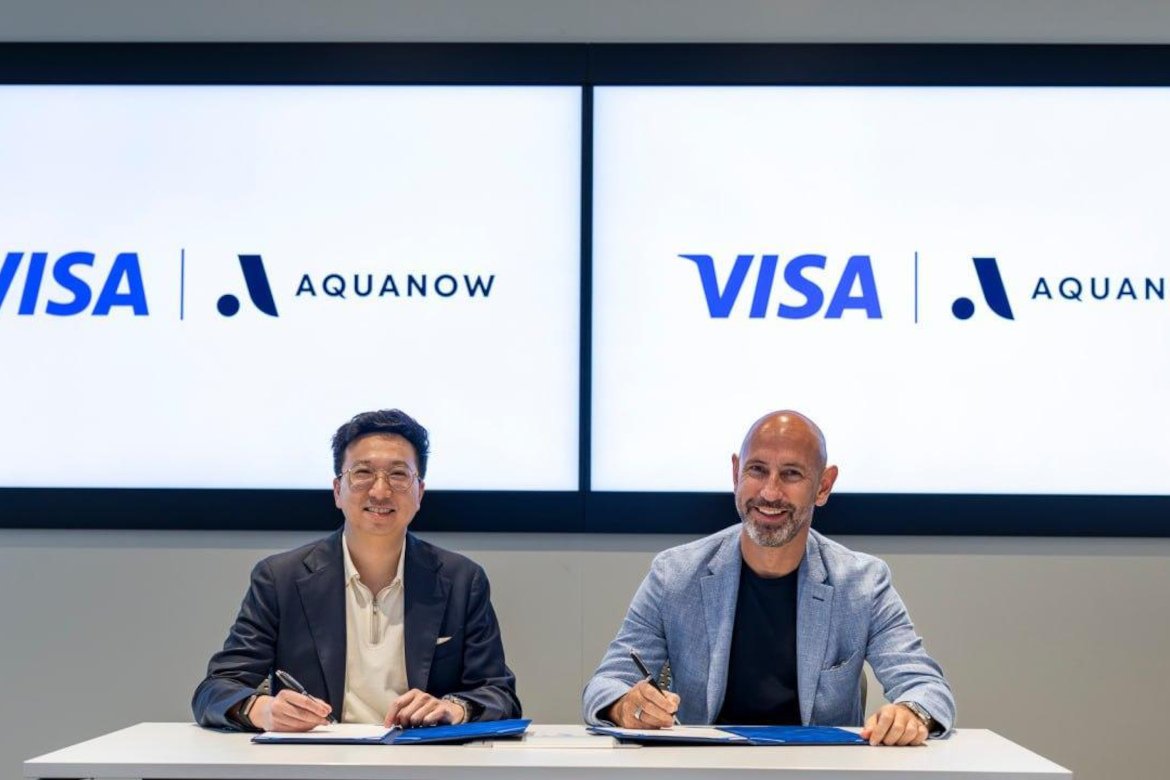


Visa has expanded its stablecoin settlement capabilities across the Central and Eastern Europe, Middle East and Africa region through a new partnership with Aquanow, a global digital assets platform specializing in liquidity and infrastructure.
The integration allows Visa’s issuers and acquirers to settle transactions using approved stablecoins such as USDC, lowering operational costs and significantly accelerating settlement speed for cross-border transactions.
Visa’s move reflects growing demand among banks and payment providers for more efficient settlement mechanisms, especially in regions where traditional cross-border rails remain slow, expensive, and heavily intermediated.
By integrating Aquanow’s digital asset infrastructure into its own payments stack, Visa aims to enable 365-day settlement, improving operational continuity and reducing friction in international money movement.
Visa was one of the first major payments networks to experiment with stablecoin settlement, beginning with a pilot in 2023 that allowed clients to fulfill settlement obligations in USDC. Since then, monthly volume on stablecoin settlement rails has surpassed an annualized 2.5 billion dollars, underscoring accelerating institutional adoption.
“By harnessing the power of stablecoins and pairing them with our trusted global technology, we are enabling financial institutions in CEMEA to experience faster and simpler settlements,” said Godfrey Sullivan, Head of Product and Solutions for the region.
He noted that the Aquanow partnership represents a meaningful step in modernizing the back-end infrastructure of payments and reducing reliance on legacy systems that involve multiple intermediaries.
Aquanow Provides Infrastructure for Digital Asset Settlement
Aquanow, which powers billions of dollars in monthly crypto brokerage and payments volume, will provide the connectivity and infrastructure layer allowing Visa participants to settle in stablecoins with near-instant finality. The firm’s CEO, Phil Sham, said the collaboration will help institutions access digital asset markets with the speed and transparency of internet-native settlement.
Aquanow operates across multiple jurisdictions with regulatory approval, including Dubai’s Virtual Assets Regulatory Authority, where its regional operation offers broker-dealer, lending, and investment services. The partnership aligns with Visa’s broader strategy to support regulated digital asset adoption among traditional financial institutions.
The Future of Global Money Movement
Visa’s expanded settlement capabilities highlight a broader industry shift toward blockchain-enabled financial infrastructure. Stablecoins have become a foundational component in global money movement due to their programmability, transparency, and speed, especially in markets with high remittance volumes and cross-border trade.
The CEMEA region, which includes fast-growing digital payments markets such as the UAE, Saudi Arabia, Kenya, and South Africa, exhibits strong demand for next-generation settlement rails. By combining Visa’s global network with Aquanow’s digital asset expertise, the companies aim to offer a more resilient, low-cost alternative to traditional settlement mechanisms.
As financial institutions increase their use of tokenized money and digital asset settlement, partnerships like this are expected to play a central role in building the future of global payments. Visa’s collaboration with Aquanow reinforces that stablecoins have moved from experimental tools to practical infrastructure powering real-world financial activity.