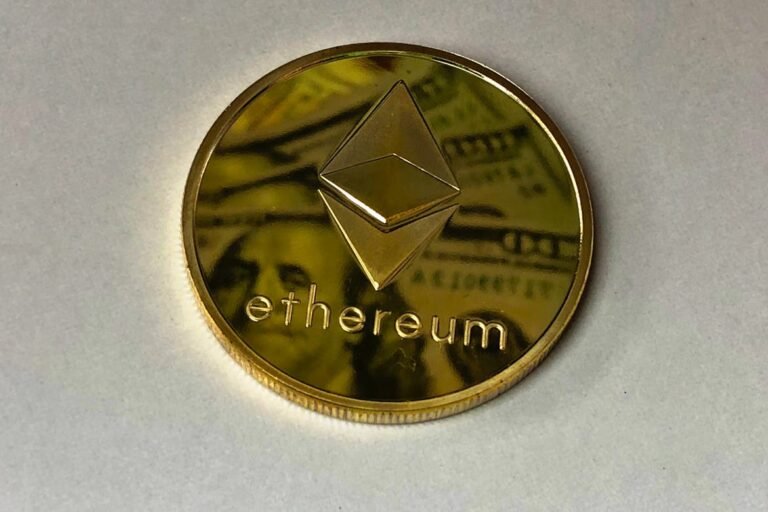
Decentralized Finance, or DeFi, is an ecosystem of financial applications built on blockchain technology that operates without traditional intermediaries like banks or brokerages. This guide explains how DeFi uses smart contracts to provide global, permissionless access to lending, trading, and borrowing.
Decentralized Finance, commonly referred to as DeFi, represents a shift from traditional, centralized financial systems to peer-to-peer finance enabled by decentralized technologies. Unlike traditional banking, which relies on institutions like banks and clearinghouses to facilitate transactions, DeFi utilizes open-source software and public blockchains to execute financial services.
By removing the middleman, DeFi aims to provide a more accessible, transparent, and efficient financial infrastructure. This ecosystem allows individuals to lend, borrow, trade, and earn interest on their assets globally, requiring only an internet connection and a digital wallet to participate.
What Is Decentralized Finance?
DeFi is a collective term for a variety of financial applications and projects built primarily on public blockchains like Ethereum. The core objective is to recreate traditional financial instruments—such as loans, insurance, and asset exchanges—in a decentralized architecture. In this model, the code itself acts as the arbiter, ensuring that transactions occur according to pre-defined rules without the need for a human supervisor.
The movement is rooted in the principle of financial sovereignty. In a centralized system, a bank can deny a loan or freeze an account based on internal policies or geographic restrictions. In the DeFi ecosystem, the underlying protocols are permissionless, meaning they do not discriminate based on the user’s identity or location, provided the user meets the technical requirements of the protocol.
How DeFi Works Through Smart Contracts
The functional backbone of DeFi is the smart contract. A smart contract is a self-executing program stored on a blockchain that automatically triggers specific actions when certain conditions are met. For example, a lending smart contract might automatically release collateral to a lender if a borrower fails to repay a loan by a certain time.
Because these contracts are hosted on a public ledger, they are transparent and immutable. Anyone can inspect the code to verify how the protocol functions, and once deployed, the terms of the contract cannot be altered by a single party. This replaces the “trust” typically placed in a bank with “verification” provided by mathematical logic and cryptographic proofs.
What Makes DeFi Different From Traditional Finance
The most significant difference between DeFi and traditional finance is the removal of centralized control. In a traditional setting, a central bank or a corporate board manages the system, maintains the ledgers, and controls access. In DeFi, the ledger is distributed across thousands of computers, and governance is often handled by a community of token holders who vote on protocol upgrades.
Speed and availability also distinguish the two systems. Traditional markets operate on set business hours and often require several days to settle complex transactions. DeFi protocols operate 24 hours a day, 7 days a week, and settle transactions almost instantly once the blockchain confirms the block. Furthermore, DeFi is interoperable, meaning different applications can be layered or connected. This concept is often described as “money legos.”
Common Use Cases for DeFi Protocols
One of the most popular applications of DeFi is decentralized trading through Automated Market Makers (AMMs). These platforms allow users to swap one cryptocurrency for another without a centralized exchange matching buyers and sellers. Instead, users trade against a liquidity pool funded by other participants who earn a portion of the trading fees.
Lending and borrowing are also foundational to the ecosystem. Users can deposit their digital assets into a protocol to earn interest, while others can borrow against their own holdings by providing collateral. Additionally, DeFi has introduced “yield farming,” where participants move their assets between different protocols to maximize their returns through interest and incentive tokens.
Risks and Limitations of DeFi
Despite its innovation, DeFi carries significant risks that beginners must understand. Since the system relies entirely on code, “smart contract risk” is a primary concern. If a vulnerability exists in the code, hackers can exploit it to drain funds from a protocol. Unlike a regulated bank account, there is typically no insurance or central authority to reverse these transactions or reimburse victims.
Market volatility and “impermanent loss” also pose financial risks to participants. Because many DeFi activities require users to lock up their assets as collateral or liquidity, a sudden drop in market prices can lead to automatic liquidations. Furthermore, the lack of regulatory oversight means users must take full responsibility for their own security and due diligence, as there is no “forgot password” button or customer support desk.
In Conclusion
DeFi represents a significant evolution in how financial services can be delivered, offering a transparent and inclusive alternative to the legacy banking system. By utilizing smart contracts and blockchain technology, it provides users with unprecedented control over their capital and access to complex financial tools. However, the technical complexity and inherent risks of the space require a cautious approach and a commitment to ongoing education.