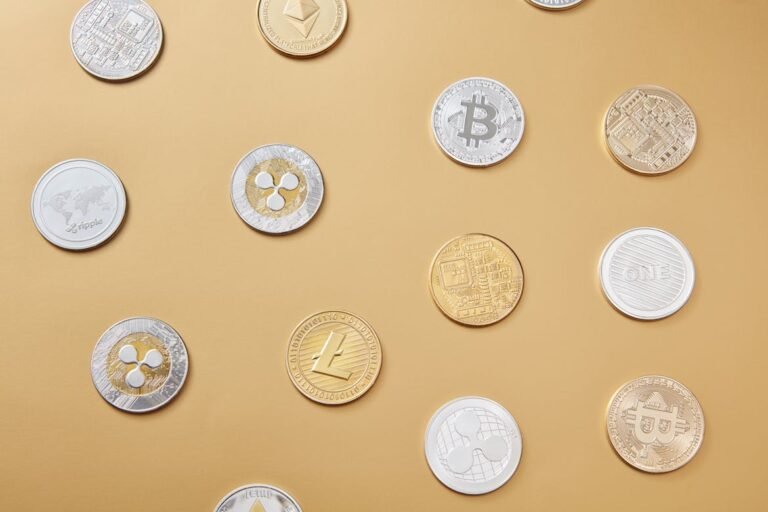
Altcoins expanded crypto from a single digital asset into a wider market built around payments, smart contracts, and blockchain infrastructure. Photo: DS stories / Pexels
Altcoins are cryptocurrencies other than Bitcoin, spanning smart contract platforms, payment tokens, stablecoins, and utility assets. For beginners, understanding altcoins is key to understanding how crypto expanded from one digital asset into a broad market of competing blockchain networks.
Altcoins are cryptocurrencies other than Bitcoin. The term comes from “alternative coins,” but the category is much broader than it sounds. In today’s market, altcoins include everything from smart contract platforms and payment-focused tokens to stablecoins and protocol assets tied to decentralized applications. For beginners, altcoins are important because they explain how crypto evolved from Bitcoin’s original design into a much larger financial and technology ecosystem.
What Are Altcoins?
Bitcoin was the first successful cryptocurrency, but it did not remain the only one for long. Once developers saw that decentralized digital money could work, they started building new networks with different features, faster settlement, broader programmability, or more specialized use cases. Those newer crypto assets became known as altcoins.
In practice, the altcoin market is not one single category with one single investment case. Some altcoins power blockchains. Some help run decentralized finance applications. Some are designed to hold a stable value. Others are used mainly for governance, payments, or network access. That variety is what makes altcoins both important and harder to evaluate than Bitcoin alone.
How Altcoins Differ From Bitcoin
The easiest way to understand altcoins is to compare them with Bitcoin. Bitcoin is generally viewed as the original crypto asset and the market’s reference point. Its identity is relatively simple: a decentralized digital asset with a fixed supply that many investors treat as a store of value or a macro-sensitive asset.
Altcoins usually try to do something more specific. Some aim to support smart contracts and applications. Some focus on faster and cheaper transactions. Some are designed to serve as blockchain-based dollars. Others try to solve infrastructure problems such as cross-chain communication, data delivery, or tokenized settlement. That means altcoins are often judged less by scarcity alone and more by utility, adoption, developer activity, and competitive positioning.
The Main Types of Altcoins
One reason beginners get overwhelmed is that the altcoin market contains several different categories. A useful starting point is to separate altcoins by function. Platform tokens power blockchains that support smart contracts and applications. Payment tokens focus on transferring value efficiently. Stablecoins are designed to keep a relatively steady value, usually by tracking a fiat currency such as the U.S. dollar. Other tokens support governance, decentralized finance, gaming, or data infrastructure.
This functional view matters because not all altcoins carry the same level of risk or market significance. A large blockchain token tied to a widely used network is very different from a thinly traded token with little real usage. Fidelity’s educational materials note that crypto assets can differ sharply in credibility, utility, and downside risk, which is why beginners should look at more than price performance alone.
Ethereum, Solana, XRP, and Other Major Altcoins
Ethereum is the clearest example of an altcoin that became core market infrastructure. Ethereum’s own documentation describes the network as a programmable blockchain where smart contracts and decentralized applications can run. That model helped create the foundation for DeFi, token issuance, NFTs, and a large share of blockchain-based financial activity, making ETH the most important altcoin by market role and one of the largest crypto assets overall.
Solana became one of the most important large altcoins by focusing on speed, lower costs, and high-throughput design. Solana describes itself as a high-performance network for fast, secure, and affordable digital transactions, with applications spanning payments, apps, and financial services. That positioning helped it emerge as one of the main alternatives for users and developers looking beyond Ethereum.
XRP occupies a different niche. According to XRPL.org, XRP is the native digital asset of the XRP Ledger, an open-source, permissionless, decentralized blockchain built with payments in mind. XRPL materials say XRP can settle transactions in roughly 3 to 5 seconds, which is why it is often discussed through the lens of transaction efficiency and cross-border transfers rather than general-purpose smart contract dominance.
Other top altcoins show how wide the category has become. Market-cap rankings in March 2026 placed Ethereum, XRP, BNB, Solana, Tron, Cardano, and large stablecoins among the most significant non-Bitcoin assets. The exact order changes over time, but the bigger point is that the altcoin market now contains several major sectors rather than one undifferentiated group.
Why Investors Buy Altcoins
Investors usually buy altcoins for one of two reasons. The first is utility. Some altcoins power networks or applications that users believe will attract more developers, capital, and real-world activity over time. The second is market opportunity. Because altcoins are often smaller than Bitcoin, they can rise faster in strong market cycles, especially when capital rotates from Bitcoin into more speculative parts of crypto.
That potential upside is one reason altcoins remain attractive, but it is also why they can be much more volatile. Beginners often look at the gains in large altcoins and assume the whole category offers similar opportunities. In reality, some projects build durable ecosystems while others fade quickly when adoption, funding, or market attention disappears.
Risks of Investing in Altcoins
Altcoins generally carry more execution risk than Bitcoin. Their success often depends on whether a network can attract users, maintain security, compete with rival chains, and create lasting demand for its token. If those conditions fail, the token can lose relevance even if the broader crypto market remains active.
There is also a market-structure risk. Crypto remains highly volatile, regulation continues to evolve, and smaller tokens can be more exposed to liquidity problems, sharp drawdowns, and speculative trading. Fidelity’s beginner materials emphasize that some crypto assets may drop to zero or disappear, which is a useful reminder that “altcoin” is not a stamp of quality.
For beginners, the most useful habit is to ask simple questions before buying any altcoin. What does the token actually do? What network or product does it support? Who uses it? What makes it different from larger competitors? Those questions matter more than short-term hype.
In Conclusion
Altcoins turned crypto from a one-asset story into a broad digital market with competing networks, applications, and token models. They introduced smart contracts, stablecoins, faster payment systems, and new infrastructure layers that expanded blockchain far beyond Bitcoin’s original use case.
For beginners, the smartest approach is not to memorize every token, but to understand the main categories and the biggest examples. Ethereum helps explain programmable blockchain infrastructure. Solana helps explain the push for speed and lower-cost applications. XRP helps explain the payments and settlement angle. Together, they show that altcoins are not just alternatives to Bitcoin – they are the assets that built most of the wider crypto economy.