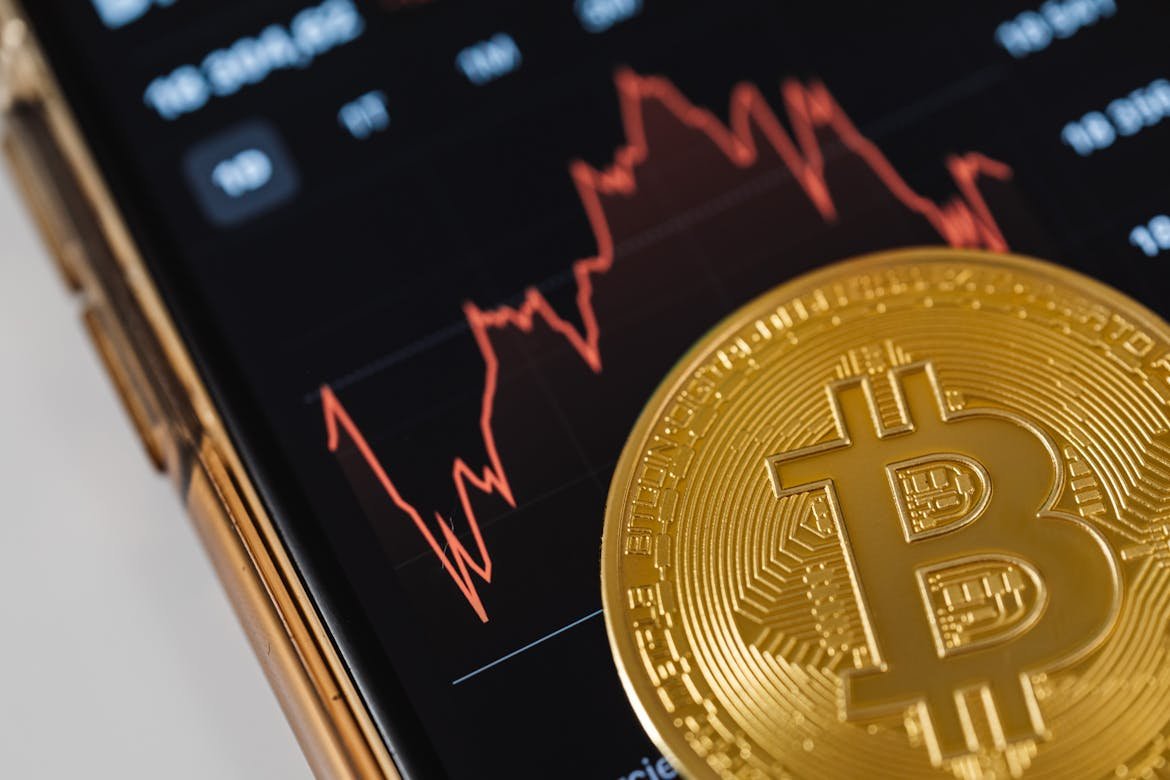

The price of Bitcoin dropped to around $70,600 after the United States announced a blockade of the strategically vital Strait of Hormuz, triggering sharp reactions across global markets. The move followed the collapse of diplomatic efforts between the US and Iran over its nuclear program, which Donald Trump described as the only issue that “really mattered.”
Bitcoin initially declined nearly 2% to around $71,600 shortly after the announcement, before sliding further as US futures markets opened. At the same time, oil prices surged dramatically, climbing roughly 9.5% to exceed $105 per barrel within minutes, highlighting how traditional markets often react more aggressively to geopolitical shocks than digital assets.
The Strait of Hormuz, a narrow passage through which roughly one-fifth of global oil supply flows, has become a focal point of rising tensions. Any disruption to this route tends to ripple across commodities, equities, and increasingly, crypto markets. The latest escalation underscores how Bitcoin, despite its decentralized nature, remains sensitive to macroeconomic and geopolitical developments.
Oil Surge Highlights Market Divergence
The sharp rise in oil prices reflects immediate concerns about supply constraints, as traders priced in the risk of prolonged disruption. Energy markets have already experienced heightened volatility in recent weeks, reaching levels not seen since the Russian invasion of Ukraine.
Trump’s directive reportedly included orders for the US Navy to block vessels interacting with Iranian-controlled routes and to neutralize maritime threats such as mines. He also criticized Iran’s actions as “world extortion,” escalating rhetoric that has further unsettled global markets.
While oil reacted with a spike, Bitcoin’s decline remained relatively contained. This divergence highlights a key difference: commodities like oil are directly tied to physical supply chains, whereas Bitcoin trades more as a macro-sensitive risk asset influenced by investor sentiment and liquidity conditions.
Bitcoin Holds Ground Despite Ongoing Conflict
Despite the recent dip, Bitcoin has shown resilience over the broader timeline of the US-Iran conflict. Since tensions escalated in late February, following a US airstrike that reportedly killed Iran’s Supreme Leader, Bitcoin has still posted gains of over 7%.
This performance suggests that while short-term price movements may reflect risk-off sentiment, longer-term trends continue to be supported by investor demand. Compared to traditional benchmarks like the S&P 500 and gold, Bitcoin has managed to outperform during this period, reinforcing its evolving role in global portfolios.
However, volatility remains a defining feature. Bitcoin previously reached highs above $120,000 before retracing, illustrating how quickly sentiment can shift in response to macro events. The current pullback appears to be more of a reaction to immediate uncertainty rather than a structural change in market outlook.
Geopolitics and Crypto: A Growing Connection
The latest developments highlight an increasingly important theme: cryptocurrencies are no longer isolated from global political dynamics. As institutional participation grows and Bitcoin becomes more integrated into financial systems, its sensitivity to geopolitical risk has increased.
Events like trade disruptions, military conflicts, and policy decisions now influence crypto markets alongside traditional drivers such as regulation and adoption. The Hormuz blockade serves as a clear example of how rapidly external shocks can impact digital assets.
Going forward, market participants will be closely watching both geopolitical developments and macroeconomic indicators. If tensions escalate further, continued volatility across both crypto and traditional markets is likely. Conversely, any signs of de-escalation could support a recovery in risk assets, including Bitcoin.