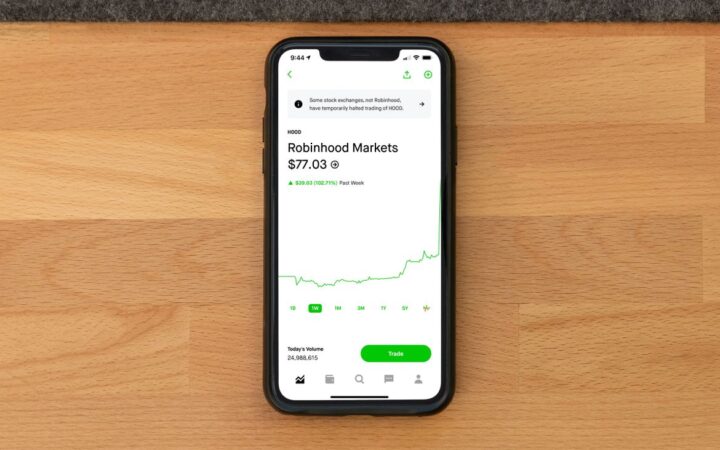
Robinhood Markets has unveiled a suite of tools that allow artificial intelligence agents to trade equities and execute consumer purchases on behalf of its users. The rollout marks one of the first major attempts by a consumer financial platform to transition conversational AI from an advisory role into a fully transactional engine.
The new products, dubbed Agentic Trading and the Agentic Credit Card, allow customers to link third-party AI assistants directly to Robinhood’s infrastructure using the Model Context Protocol (MCP) standard. Through this open integration, users can instruct autonomous software models to independently execute trading strategies, monitor market themes, rebalance portfolios, or scan the internet to purchase consumer goods.
Robinhood CEO and co-founder Vlad Tenev framed the launch as a natural progression for the retail brokerage, stating that the company’s core mission has always been to democratize finance for all, and that mission now natively extends to AI agents.
Restricting Autonomous Control via Isolate Accounts and Sandbox Safeguards
While institutional hedge funds and quantitative asset managers have long deployed automated algorithms to manage capital, extending identical execution capabilities to retail customers introduces notable platform safety and risk management hurdles. To prevent autonomous models from executing erratic trades or draining main balances, Robinhood has structured the tools inside an isolated security sandbox.
For investment strategies, users are required to open a dedicated Agentic Trading account completely separated from their primary brokerage portfolio. The connected AI agent is strictly bound to this siloed environment and can only deploy the specific capital an account holder manually allocates to it. In its initial beta phase, the feature is limited exclusively to US equities, though the company plans to introduce expanded support for options, cryptocurrencies, futures, and prediction markets as the system matures.
Furthermore, account holders retain immediate oversight via real-time data logging. Every transaction initiated by an agent triggers an instant push notification to the user’s mobile device, alongside a synchronized profit-and-loss feed visible directly within the Robinhood application. If an agent’s algorithmic behavior deviates from its intended strategy, the user can terminate its platform permissions instantly with a single button tap.
Extending Financial Agency to Everyday Consumer Purchases
Parallel to the brokerage expansion, Robinhood Banking’s new framework introduces autonomous consumer commerce through the Agentic Credit Card. Available initially to Robinhood Gold members, the system allows an AI agent to scan retail markets for optimized pricing, verify product availability, and complete transactions automatically based on simple natural language prompts, such as booking the most cost-effective flight for an upcoming weekend.
To safeguard underlying user data, the agent does not gain access to the customer’s primary credit card number or broad account information. Instead, the interface issues a dedicated virtual card bound by user-defined spending limits and customizable authorization parameters, allowing individuals to choose between fully autonomous execution or mandatory manual approvals for every transaction. Purchases executed through the agentic virtual card remain eligible for the platform’s standard 3% cash-back incentives, bridging autonomous software workflows with real-world capital efficiency.
Disclaimer: CoinScreamer is an independent media brand owned and operated by NuvexMedia LLC, publishing news, research, and market insights on digital assets and related technologies. NuvexMedia LLC invests in and collaborates with companies across the digital asset, blockchain, and technology sectors. These relationships do not influence CoinScreamer’s editorial coverage, and the publication maintains full editorial independence to provide accurate, timely, and objective information. © 2025 NuvexMedia LLC. All rights reserved. This content is for informational purposes only and should not be considered legal, tax, investment, financial, or other professional advice.